photography
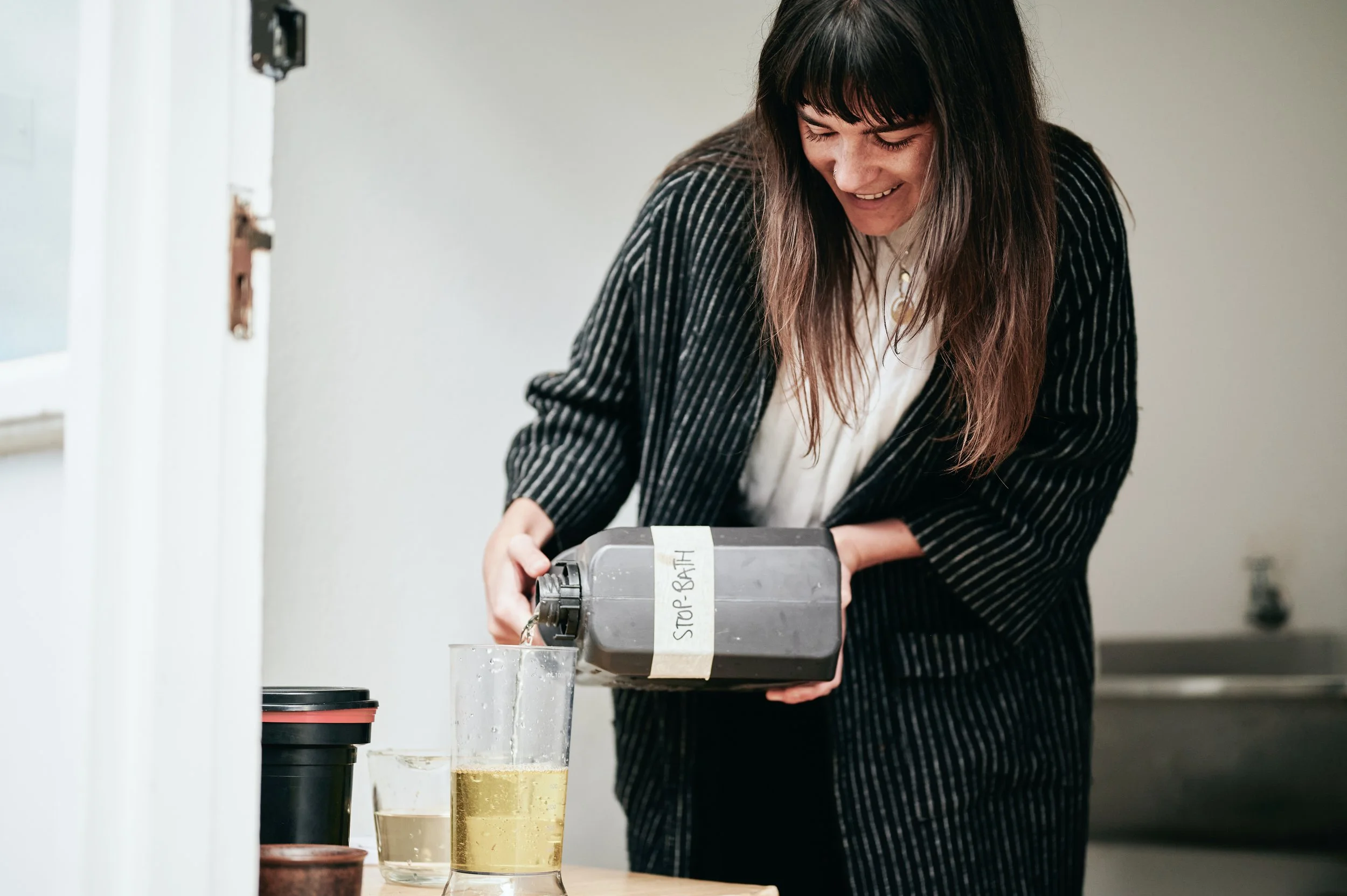
processing film in my red-brick laundry
photo credit: Rohan Thomson
In 2019 I moved to Canberra (Ngunnawal/Ngambri Country) and started frequenting my local darkroom at PhotoAccess. When the COVID lockdown began in early 2020, I contacted my friend and mentor Wouter Van de Voorde who helped me set-up my own film processing studio in my apartment block’s redbrick laundry.
It was during these quiet lockdown months, that I found myself shift into a space of more active listening - a practice of recognising and celebrating the quieter but no less potent agency of more-than human realms. As Jane Bennett considers in her book Vibrant Matter, what are the political implications of recognising matter that exists outside of the human - not just other living beings but also oceans, mountains, forests, storms and even methane producing rubbish tips - as not passive or inert but rather as 'forces with trajectories, propensities or tendencies of their own.’
I’d witnessed first-hand the recent destruction from the 2019/2020 bushfires along the east-coast of Australia. Now COVID-19 hovered like the threat of a malevolent ghost. While these two particular events are the consequences of more dramatic acts of more-than human agency they are a reminder of the forces constantly shaping our lives - challenging our western, capitalist society’s illusion of control over the natural world.
Processing film at home increased my intrigue around the materiality of analogue film and the possibilities this presents. I became interested in how unpredictable results from more-than human agents might disrupt my authorial control over the image and break open the permanency of the photograph. When the lockdown ended I travelled to the South Coast, NSW (Walbunja Country). It was early winter and the cold overcast light gave the day a timeless quality. I collected a jar of water from the ocean and processed my first roll of salt-stained analogue film.
When processing film with ocean water the corrosive properties of the salt lifts the silver emulsion and the representational image is rendered vague. However an essence of the site is introduced to the frame as fractals form on the horizon and crystals appear around the disappearing edges. To me it feels the image becomes alive; the crusty tactility of vibrant matter paints its way onto the negative.

salt-stained negatives
photo credit: Rohan Thomson
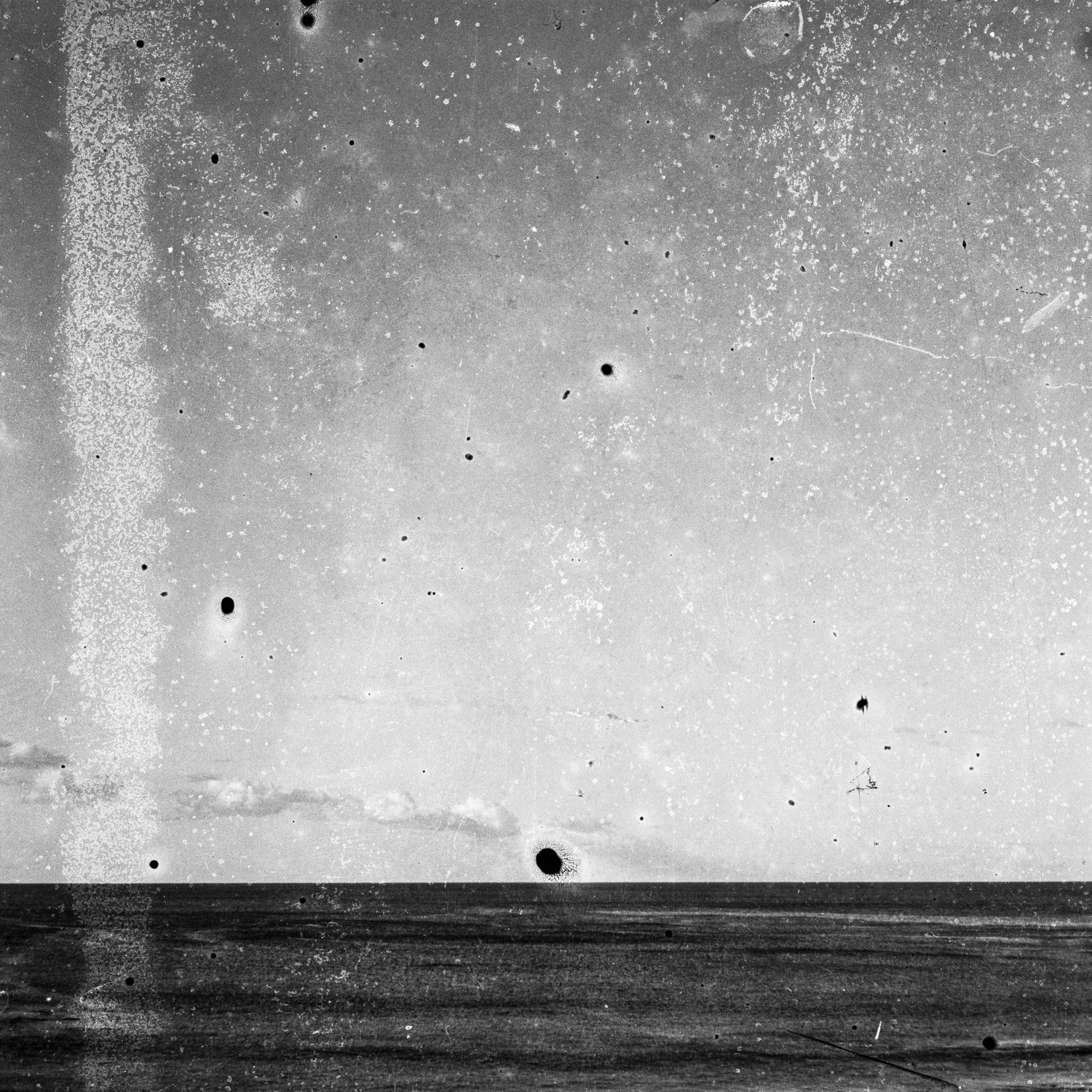
Near Rosedale, 2020
6x6 photographic negative processed with Pacific Ocean water

Murramurang NP #1, 2020
6x6 photographic negative processed with Pacific Ocean water
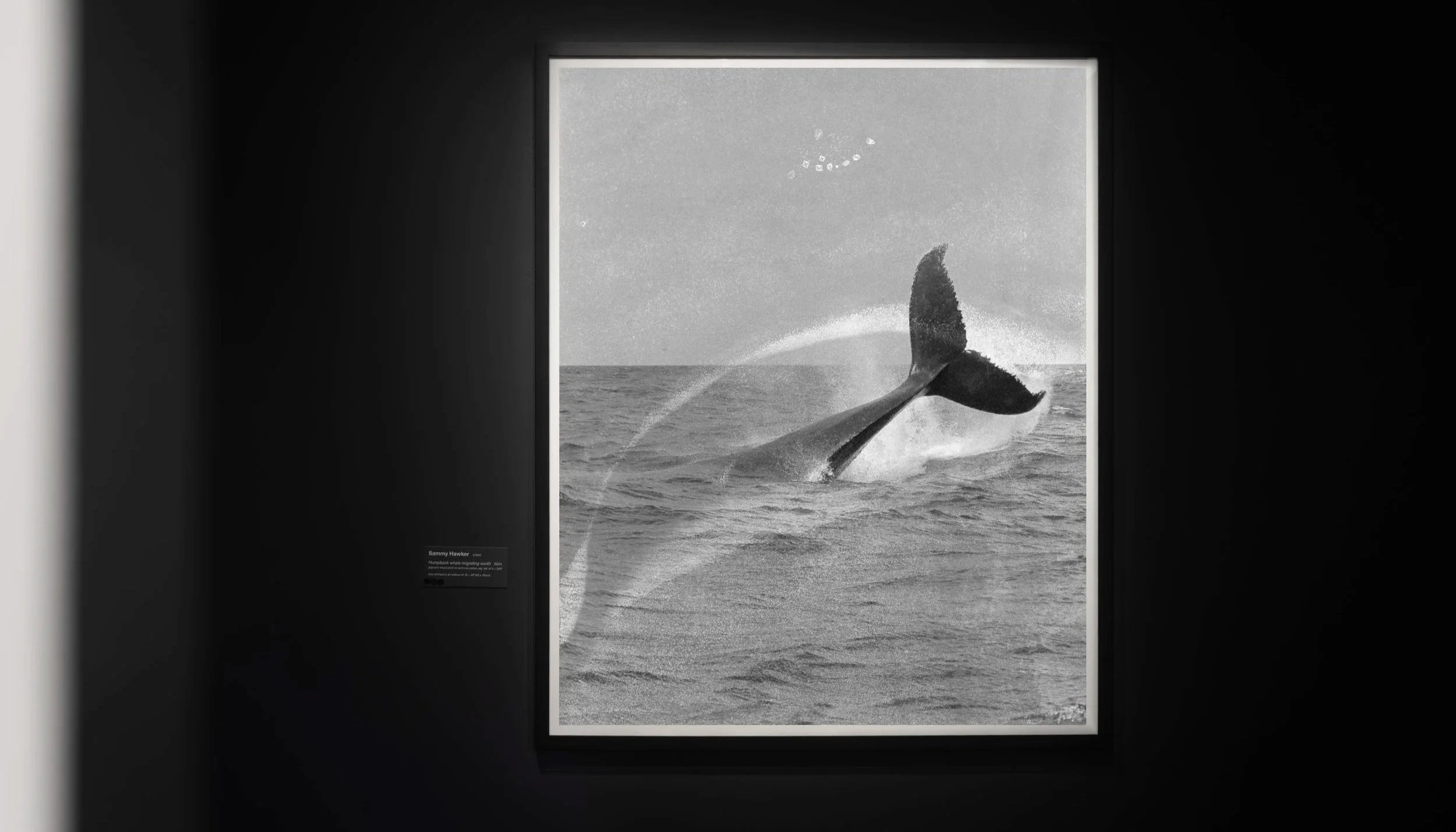
Humpback Whale Migrating South, 2024
35mm photographic negative processed with Pacific Ocean water
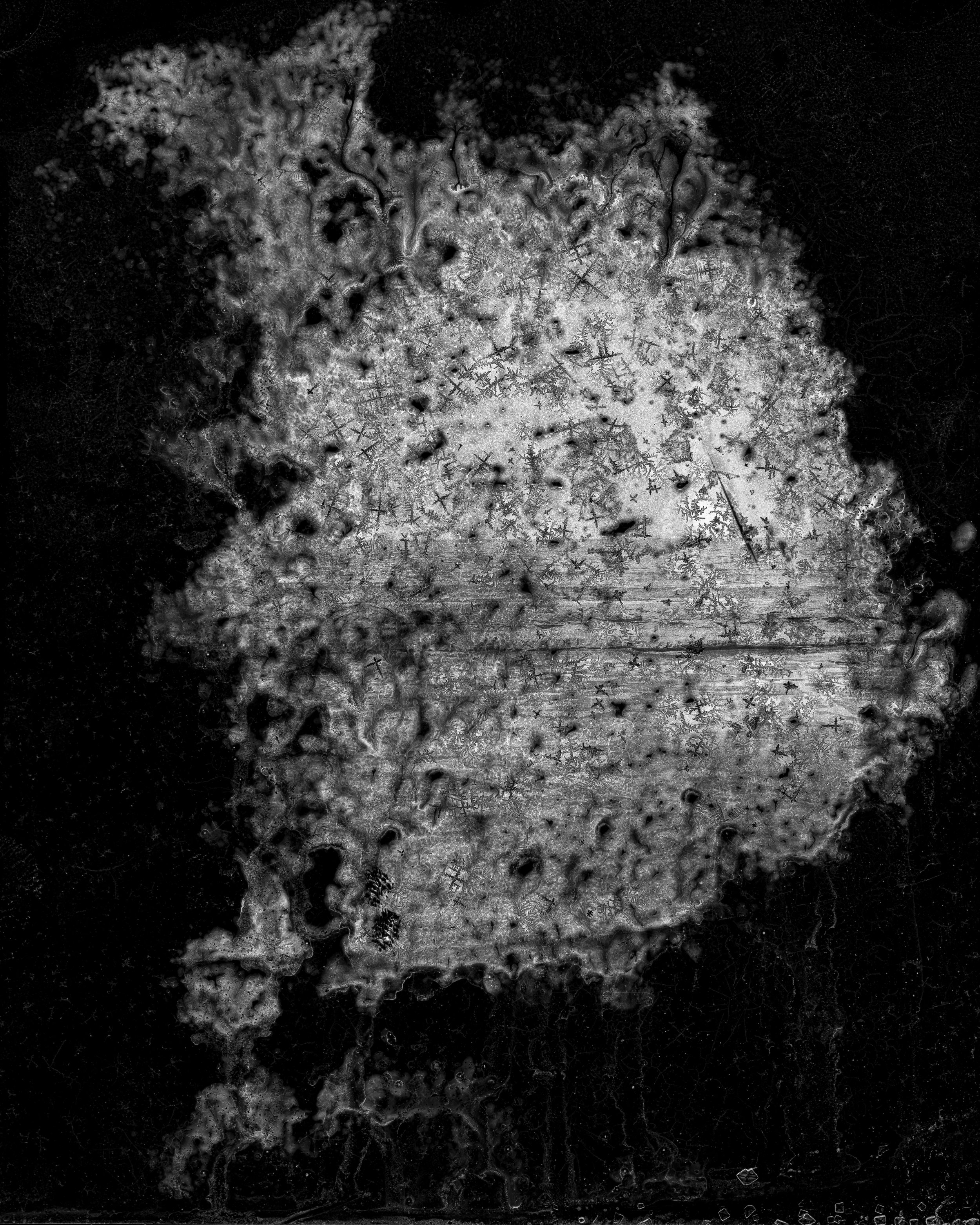
Dark Crystals, 2021
4x5 photographic negative processed with Pacific Ocean water
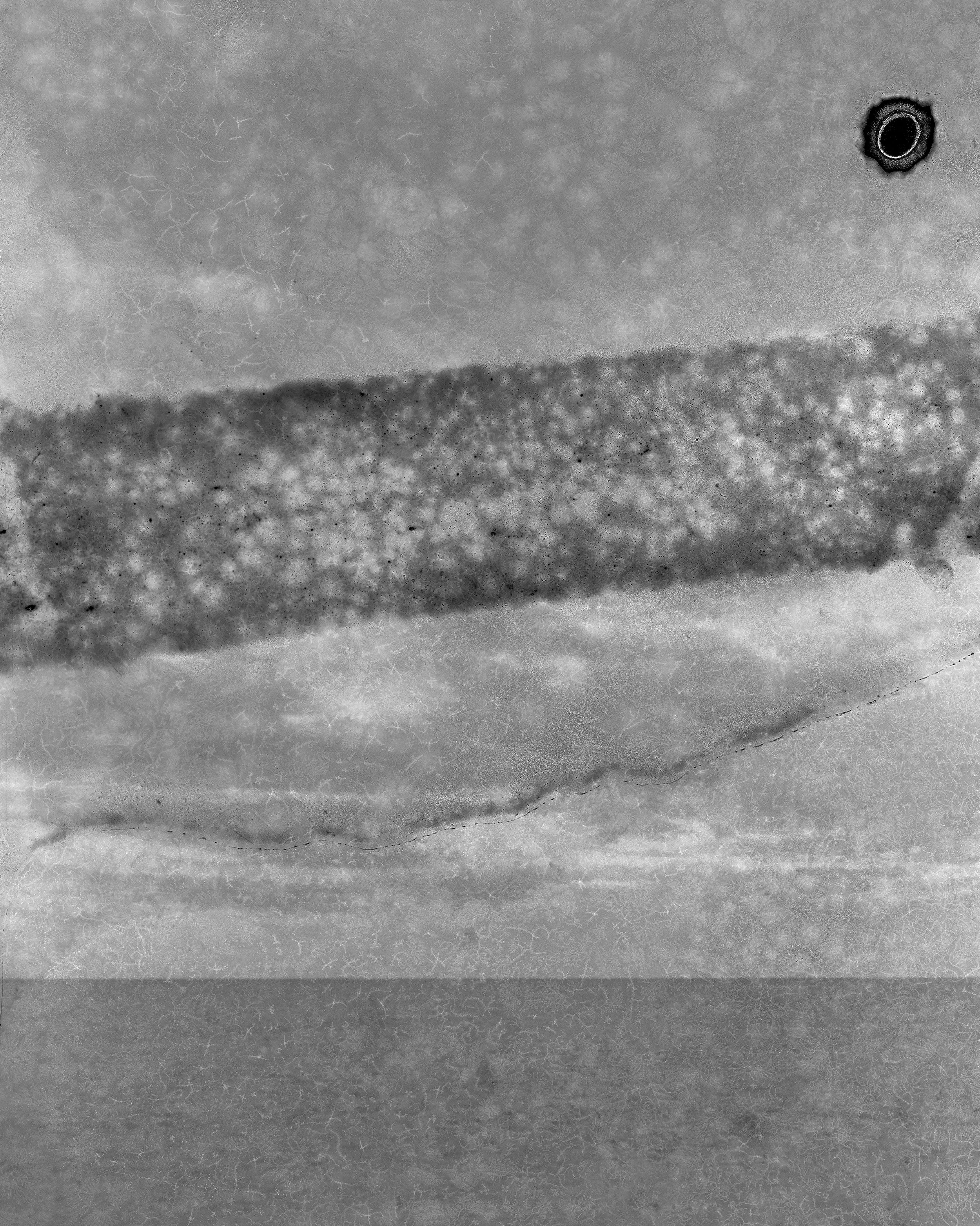
Ghost Bells, 2025
4x5 photographic negative processed with water from the North Sea
The photographic surface registers time, mineral activity and decay — a topography formed through corrosion, crystallisation and the slow alchemy of matter. This is characteristic of Hawker’s practice: she treats the photograph as a living membrane, one that absorbs, reacts and records traces of the world it encounters.
Ghosts & Monsters, 2025 | Messums West
Gabriele Taraseviciute
ABC Art Works
produced by Richard Mockler
Series 3, 2023
Relevant exhibitions:
Processing film with more-than human realms challenges the notion of photography as a fixed truth. The photographic negative becomes a mutable and responsive medium, capable of revealing the elemental forces that shape our environment. Alongside photographs co-created with the Pacific Ocean I have worked with muddy lake water of Ngungara (Lake George), rainwater from storm clouds, coal-mine waste running into the Bargo river, the North Sea, Sydney Harbour, open flame, salt from Kati Thanda-Lake Eyre, seaweed and honeybees. In these works the photograph becomes an act of conversation. The final outcome feels like a dialogue between me and these co-creators - a site of negotiation between control and surrender, intention and chance - an encounter with the living chemistry of natural materials and beings.
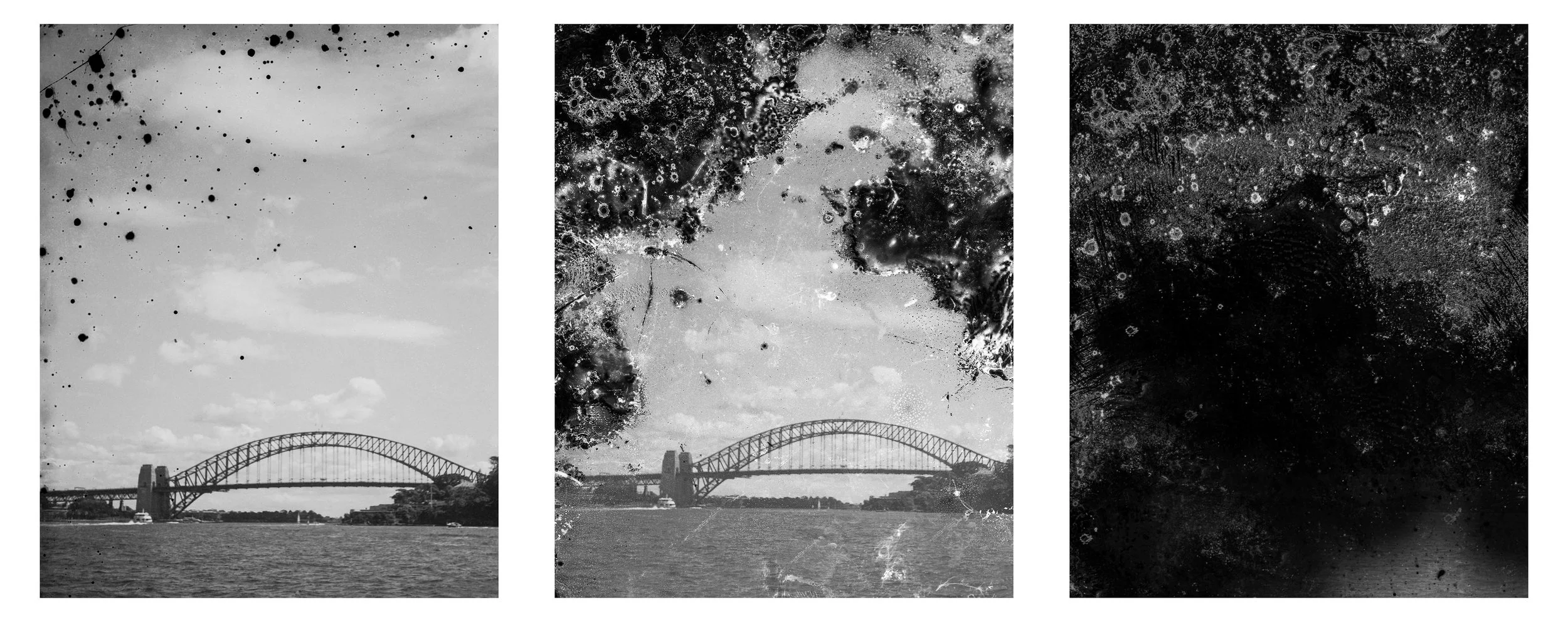
space_1 (an unoccupied area) - triptych, 2024
35mm photographic negative processed with water from Sydney Harbour
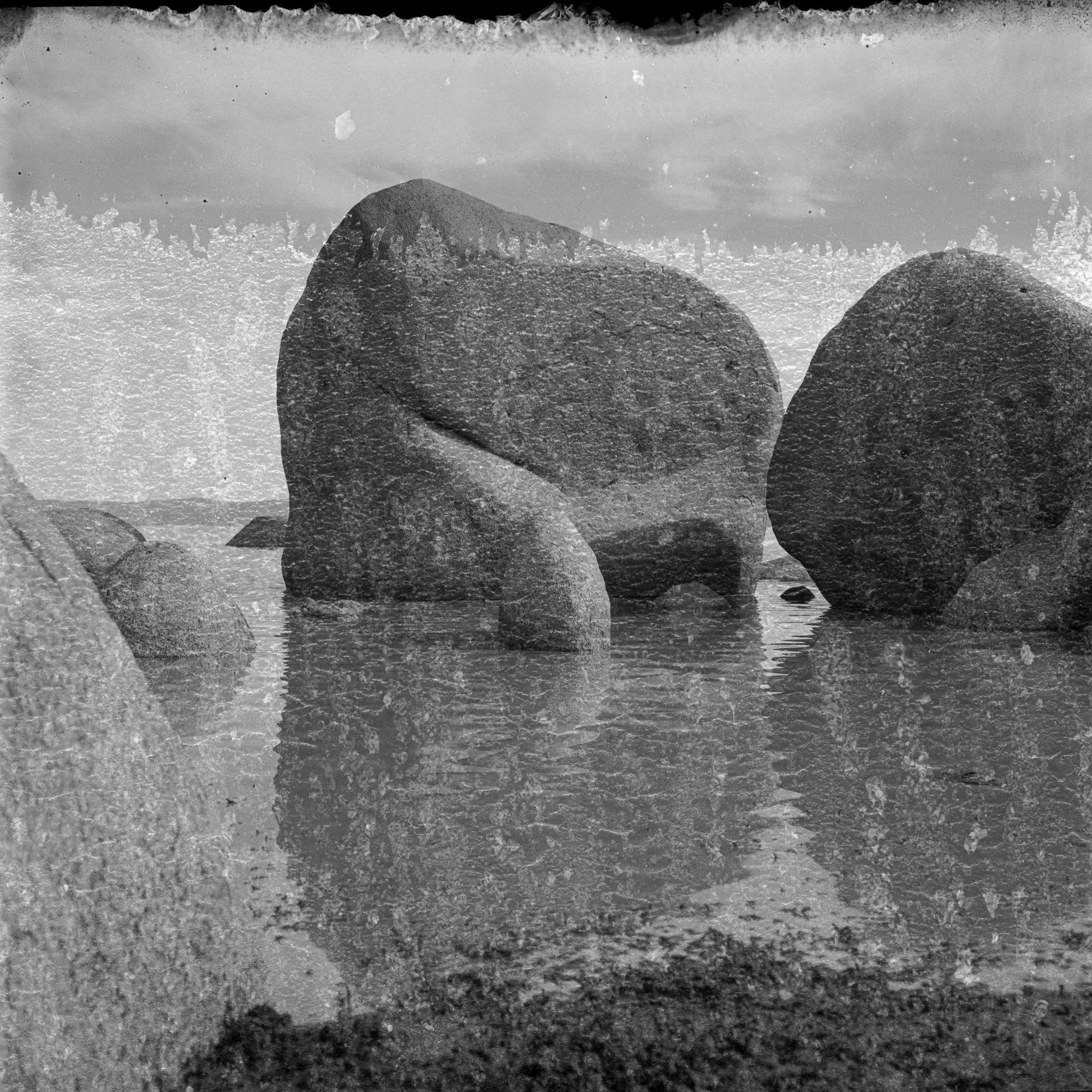
Ngungara, 2021
6x6 photographic negative processed with water from Ngungara/Lake George

Melt, 2020-21
6x6 photographic negativeprocessed with open flame
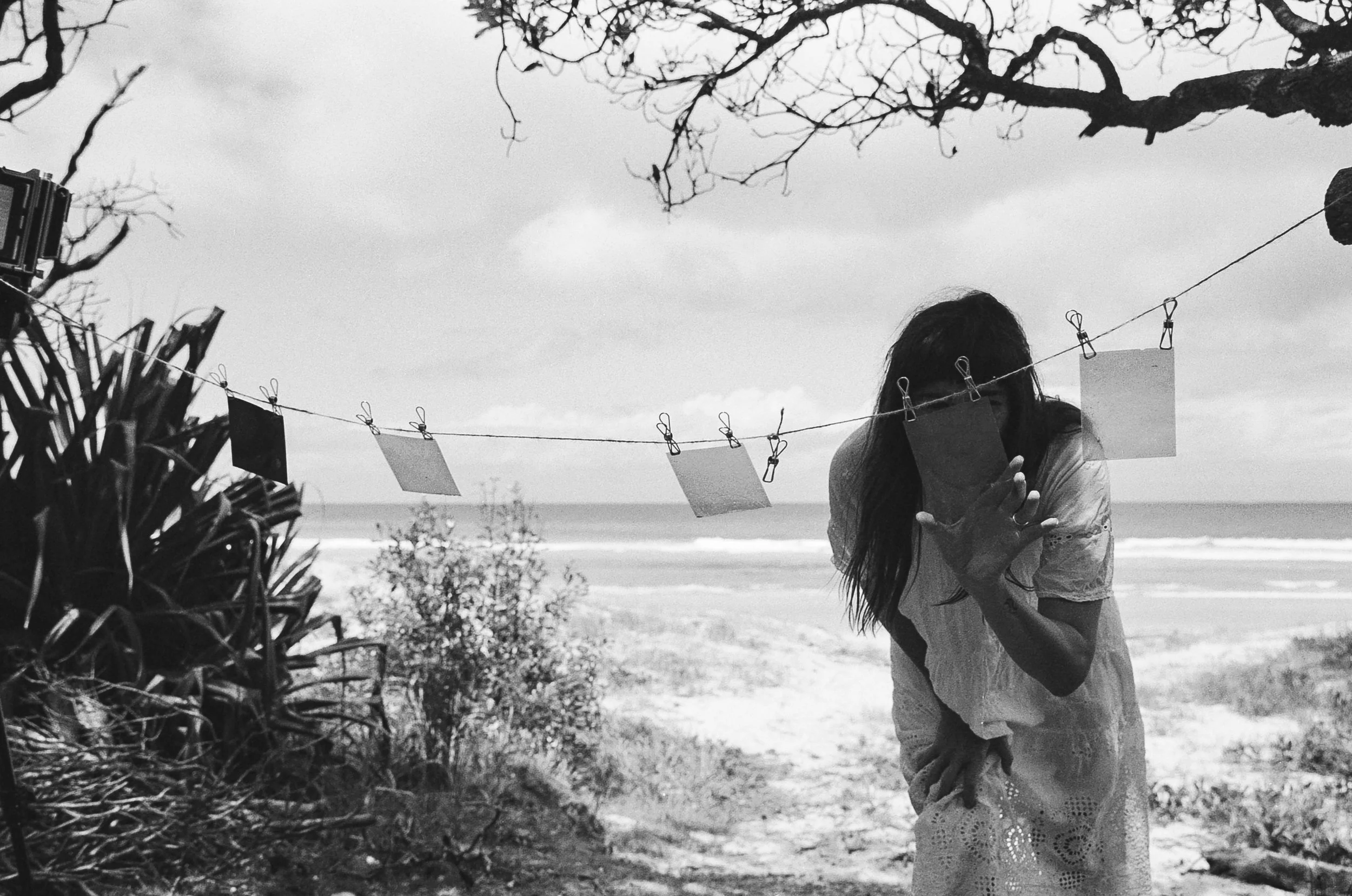
“Hawker has a very expanded idea of the studio. A set of open lipped glass jars for collecting water, lines of string for hanging negatives to dry in the wind, thick ragpaper, a wide brimmed hat and sturdy boots to clamber, a detailed diary of notes to record activity, a laptop and the cameras; the medium format 6x6 Mamiya C330 that forces the creation of a view by looking down into a reverse reflection and the large format 4x5 Linhof Technika.”
Salt, 2023 | Exhibition Essay
Virginia Rigney, Senior Curator CMAG

processing film on the edge of Kati Thanda-Lake Eyre
photo credit: Anna Hutchcroft
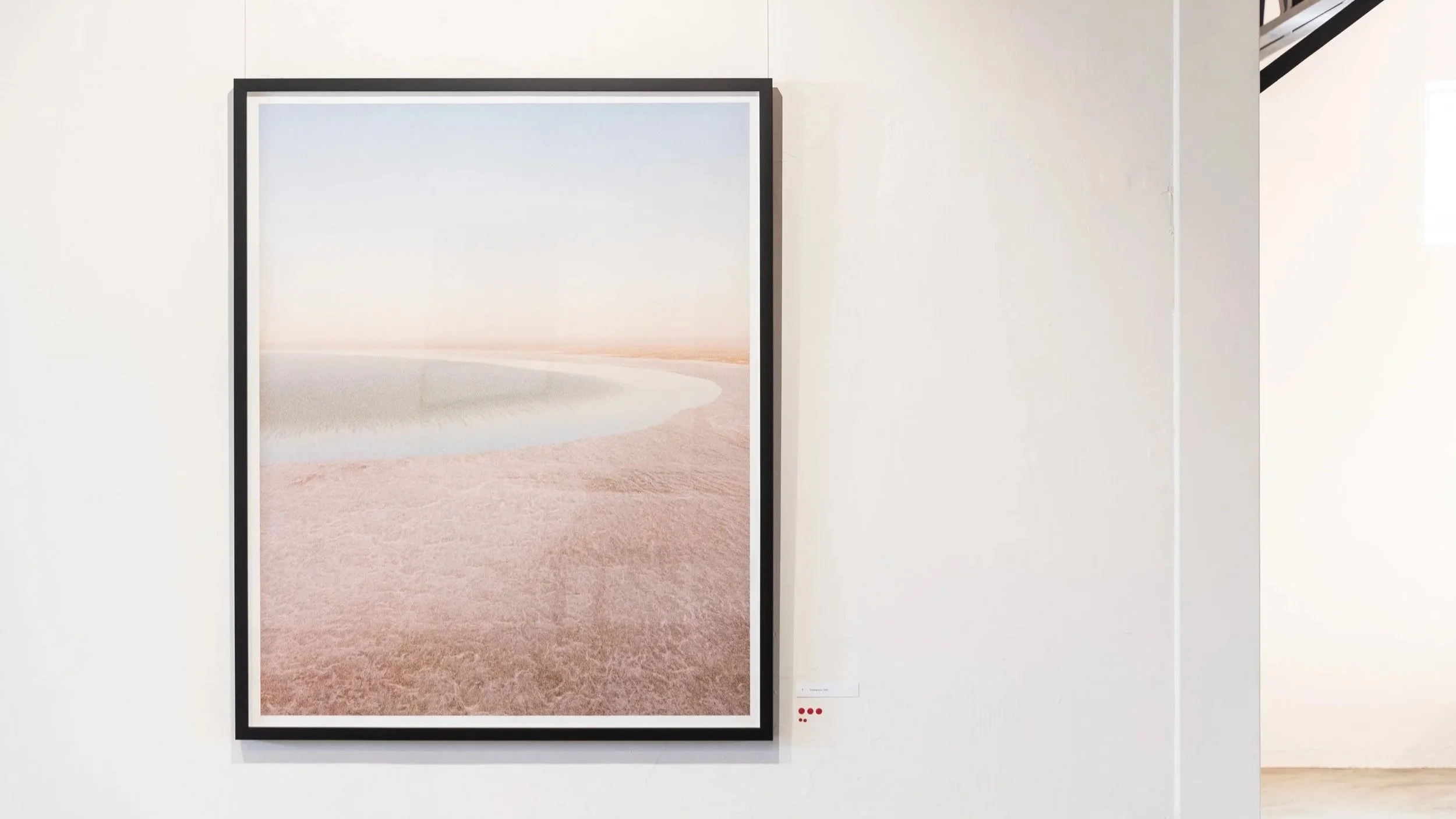
Epiphanous, 2022
Salt | The Mixing Room Gallery [2023]

Sammy’s practice is evidence of her astute relationship building, discovery of scientific, social and cultural histories, socially engaged practice, deep listening and engagement. I think of Sammy both an artist, a researcher and an archivist, with each body of work building an ever-expanding documentation of sites and moments of exchange between people and the more-than-human worlds.
Conversations with bees, 2024-5 | Exhibition Opening
Yvette Dal Pozzo, Director of Goulburn Regional Gallery

Conversation with bees | Goulburn Regional Art Gallery
Image credit: Silversalt Photography
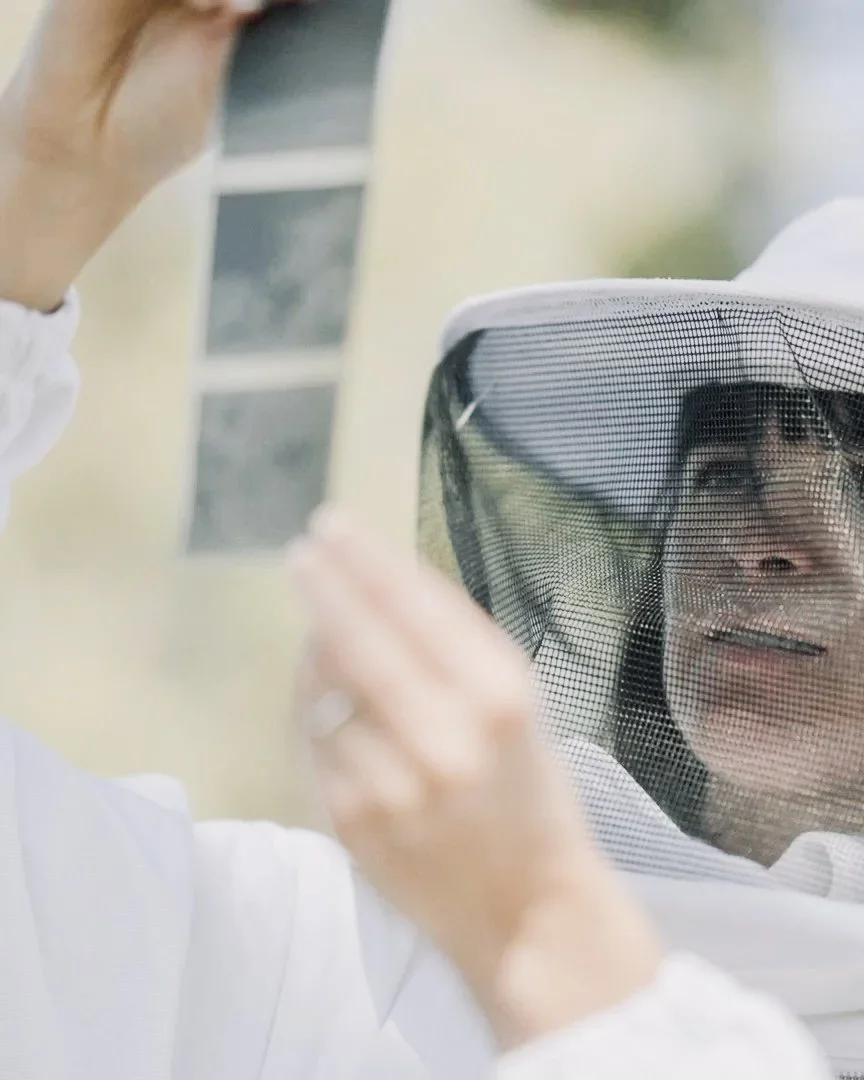
6x6 negatives for the hives | photo credit: Richard Mockler
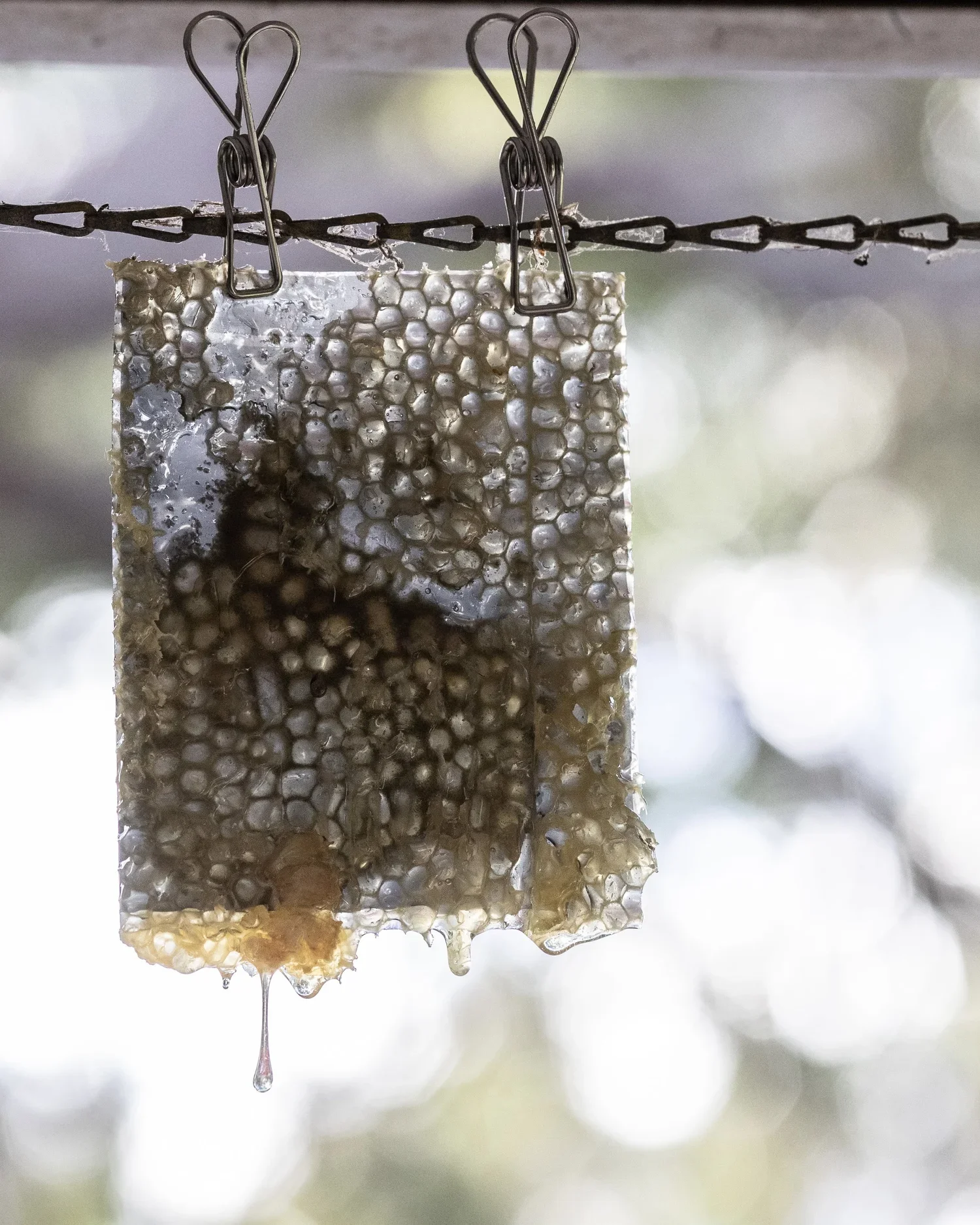
4x5 negative hanging in the studio
Copyright © All rights reserved.