Ghosts & Monsters: Symbiosis and Interspecies Dialogue
Messums West | 11 oct. - 1 dec. 2025
Sammy Hawker's works evoke ideas of the unseen and unknowable - questioning what we call a 'monster': is it a shape we give the unknown, or a reflection of what we fear and fail to understand? In her work, 'ghosts' are not supernatural, but liminal - the traces and energies that linger in materials and landscapes. Her practice, grounded in a scientific process of understanding, explores the continuity of life: the transformation of matter and energy from one form to another. She asks whether materials can hold memory, whether sound can possess consciousness, and whether presence can manifest beyond physical form.
The works in Ghosts & Monsters: Symbiosis and Interspecies Dialogue, were commenced over a series of residencies at The Corridor Project (TCP) - an artist programme based on the banks of Galari on Wiradjuri Country in Central West, NSW Australia - and continued to evolve through their adaption and evolving relationship to the 13th Century barn at Messums West.
The song of a solitary Pied butcherbird - recorded early one spring November morning at TCP in the southern hemisphere - echoed through the rafters of this ancient tithe barn throughout autumn November in Wiltshire, UK. Drawing on 18th-century experiments by physicist Ernst Chladni, the eight central notes of the Pied butcherbird’s melody were played into a Chladni plate co-designed by Hawker & Sam Tomkins. This Chladni plate oscillates salt on a metal plate to form geometric shapes from sound vibrations and the cymatic figures generated from the songbird's melody were presented as a series of etchings.
Furthermore, the cymatic figure of D# - the harmonic minor key of the bird’s melody and a note of significance to Hawker - was sketched in salt on a 12ft sq steel plate, slowly corroding into a new artwork during the course of the 7-week show. At the close of the show this plate was archived as a giant print - transforming sound, atmosphere and energetic residue into material form.
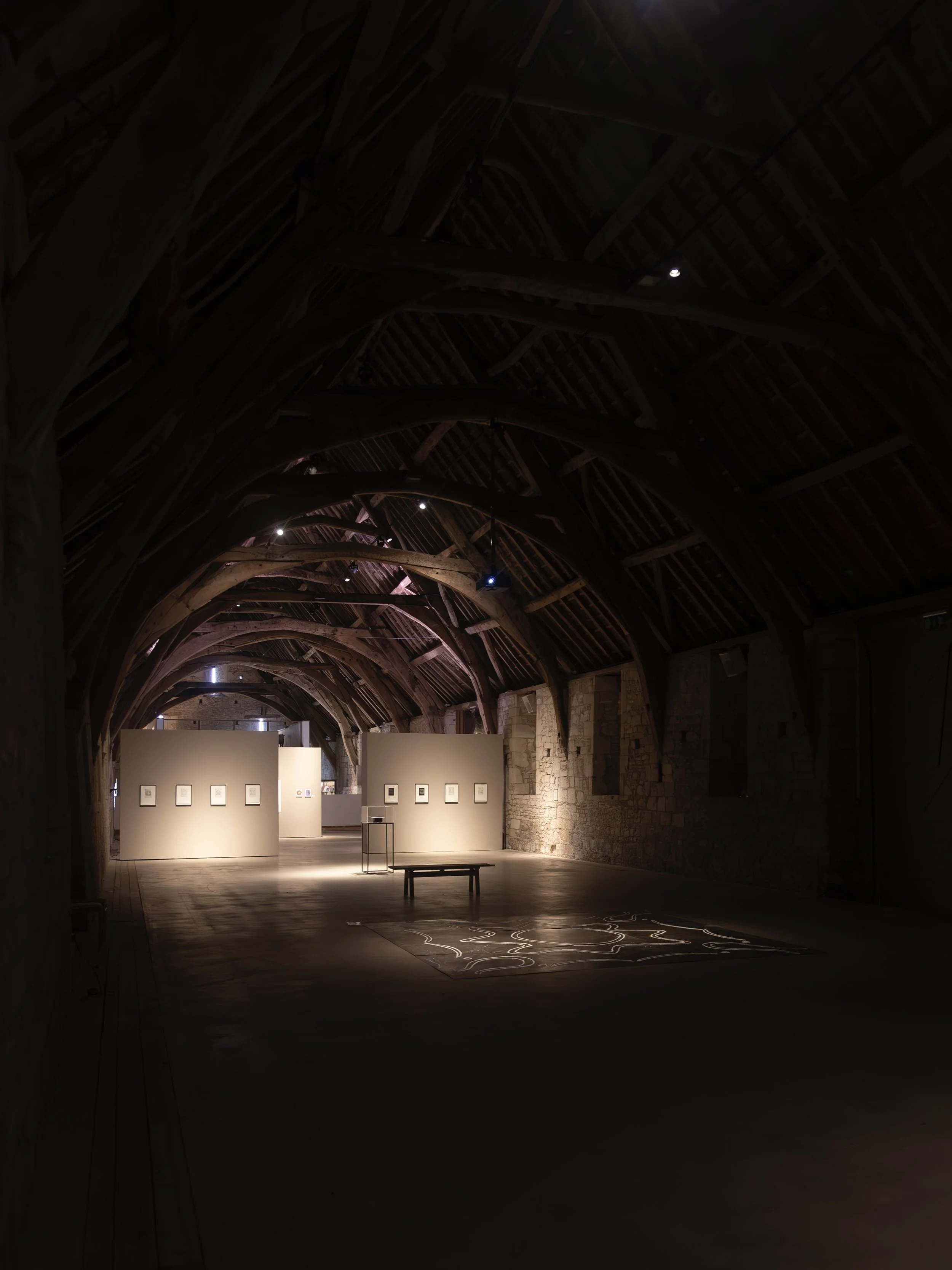
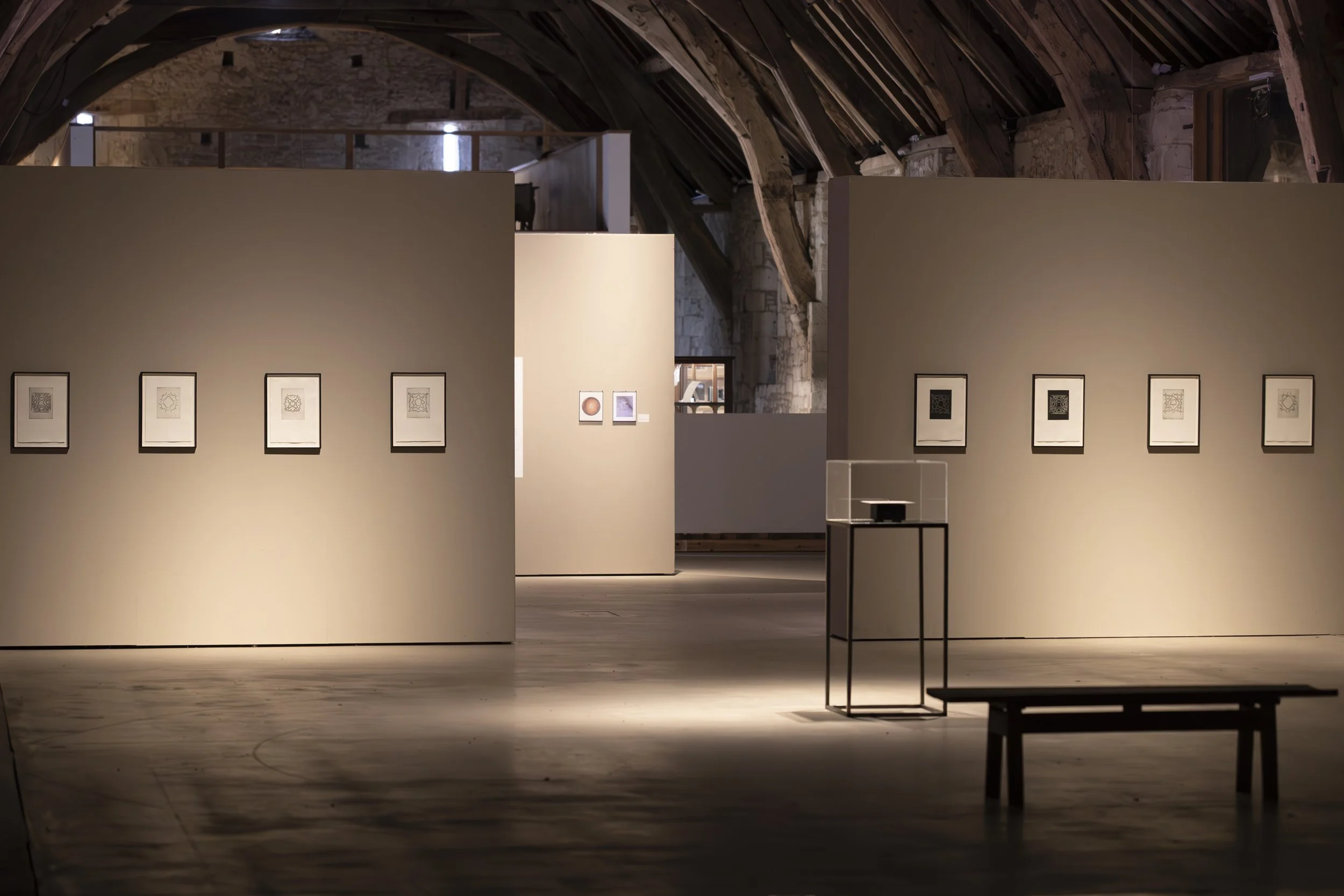
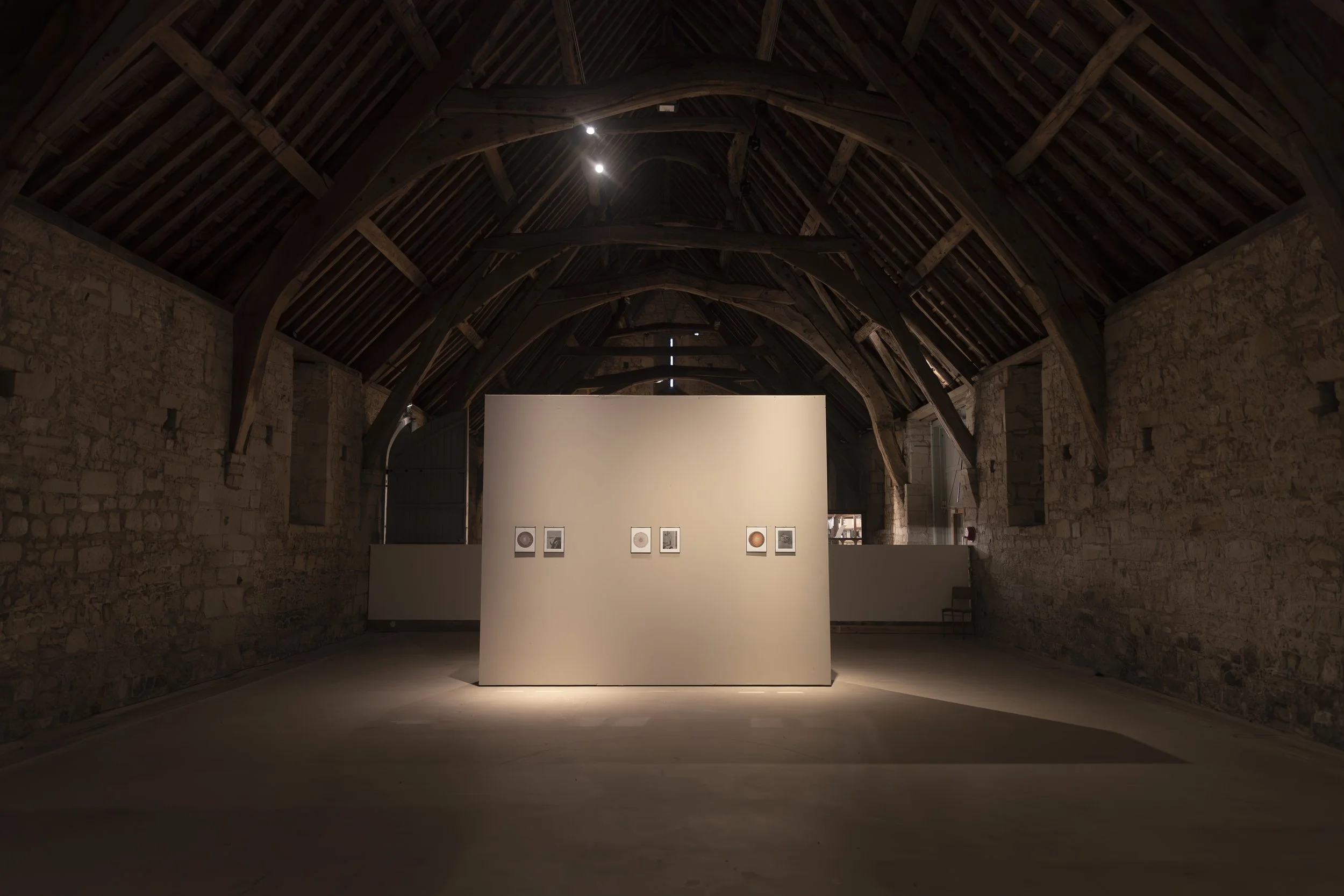
Install photos of etchings in Ghosts & Monsters at Messums West.
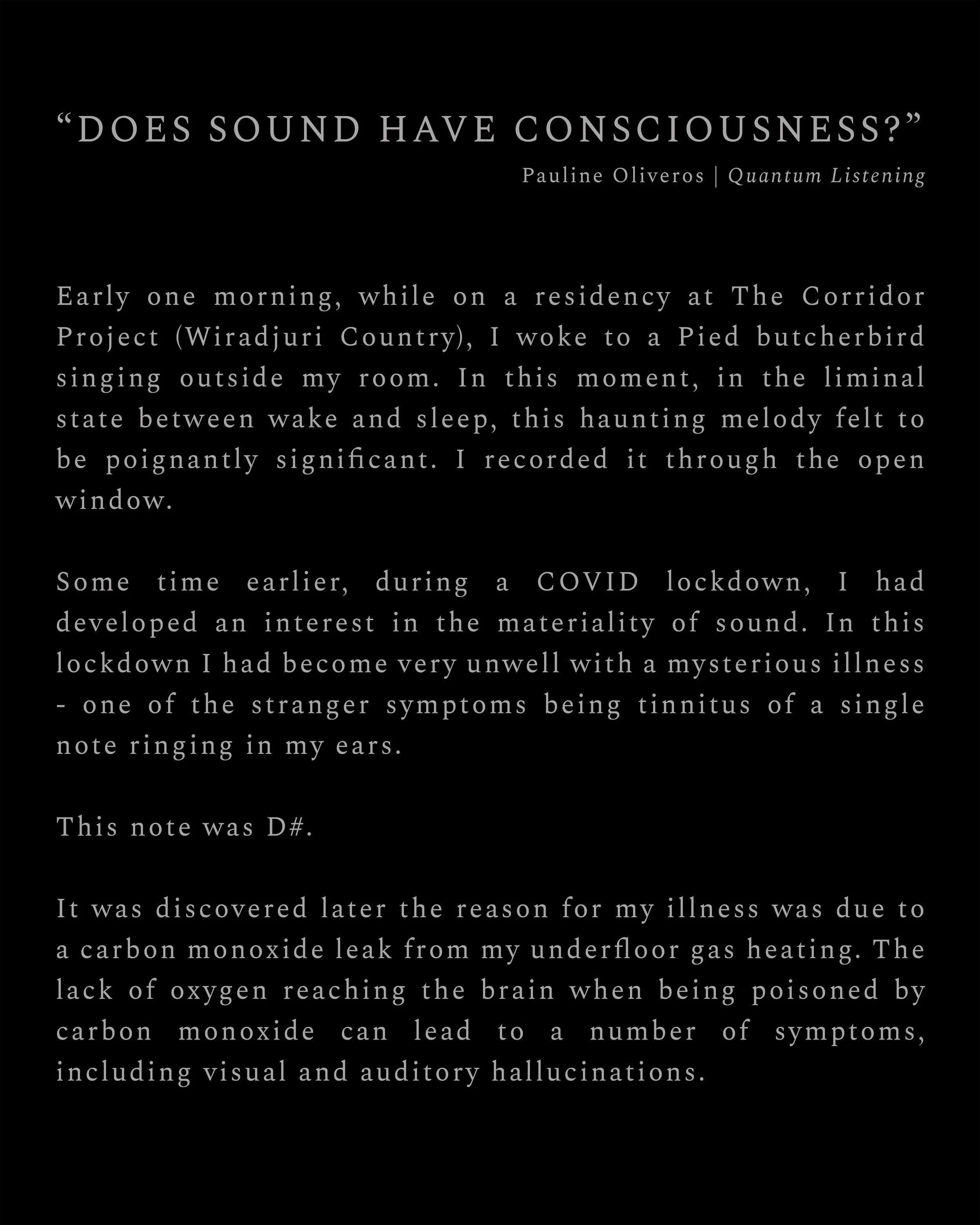
The haunting of D# sharp [by Sammy Hawker].
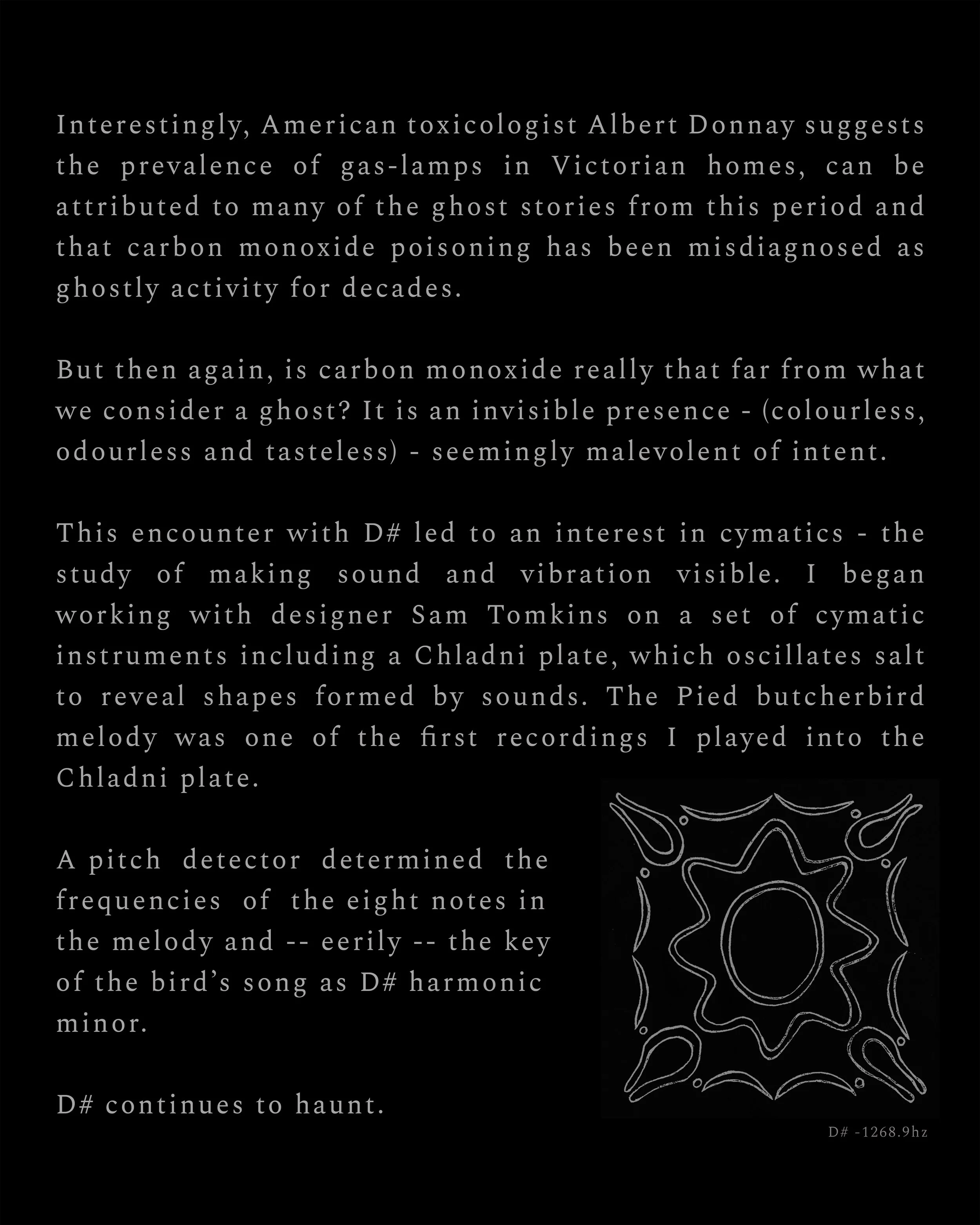
[CYMATIC FIGURES]
There is a sense of universality to the geometric shapes produced by the vibrations of the Chladni plate - resonances to iconography used by cultures from across the world. Sensitive towards incidental appropriation of Indigenous cultural property - the process and development of this body of work was discussed with Aleisha Lonsdale, who at the time was Chairperson of the Mudgee Aboriginal Lands Council (the representative body for the local Wiradjuri people).
The cymatic figures are also found to be in conversation with the medieval hexafoils inscribed around the windows and doors of the barn. Known as ‘witchmarks’, these inscriptions were seen as protective talismans, figurative shapes believed to keep malevolent spirits at bay. Like the figures that lie within sound, these hexafoils also hold hidden layers - the whispers of superstition from those who carved them hundreds of years ago.
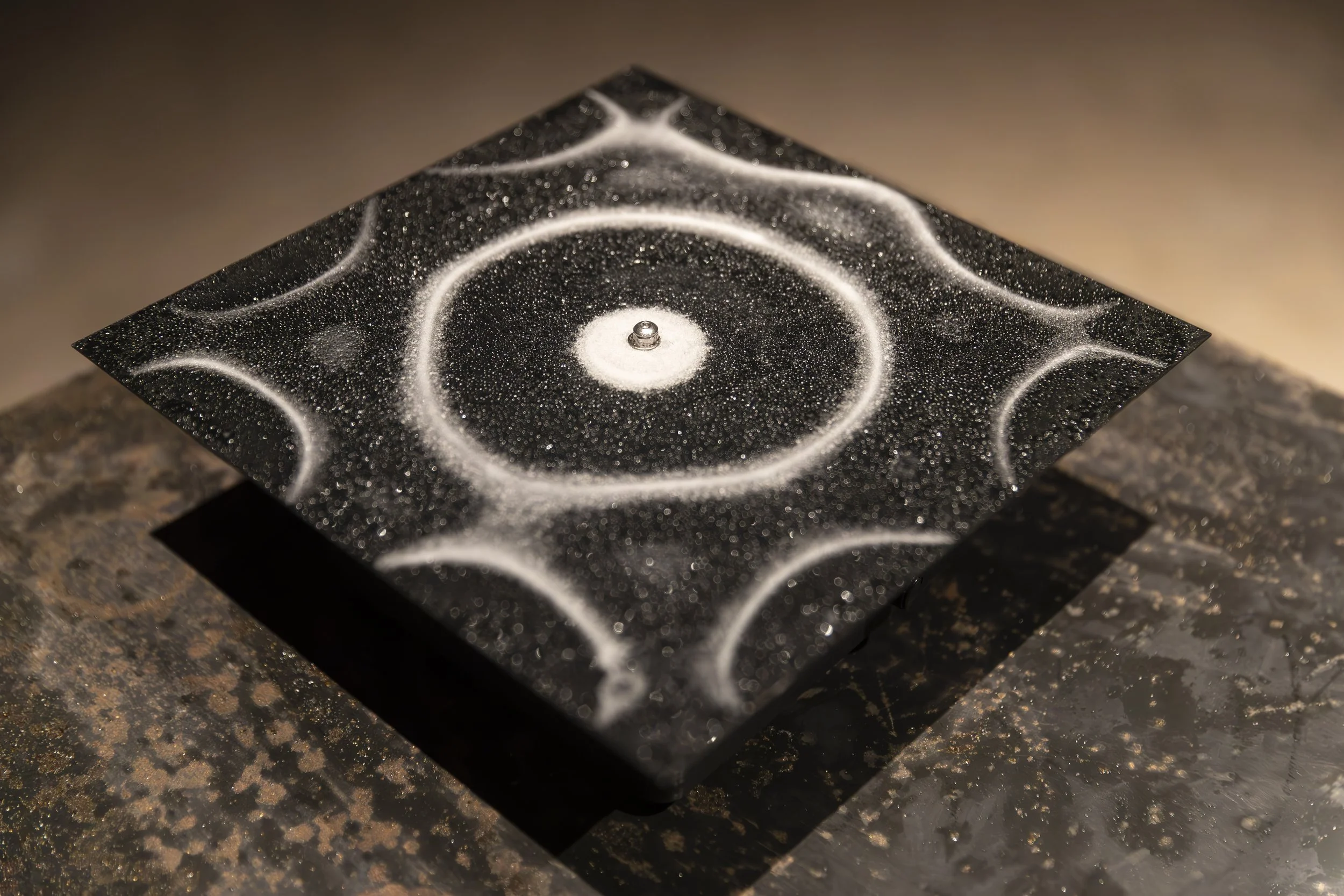
Chladni plate designed by Sam Tomkins & Sammy Hawker.
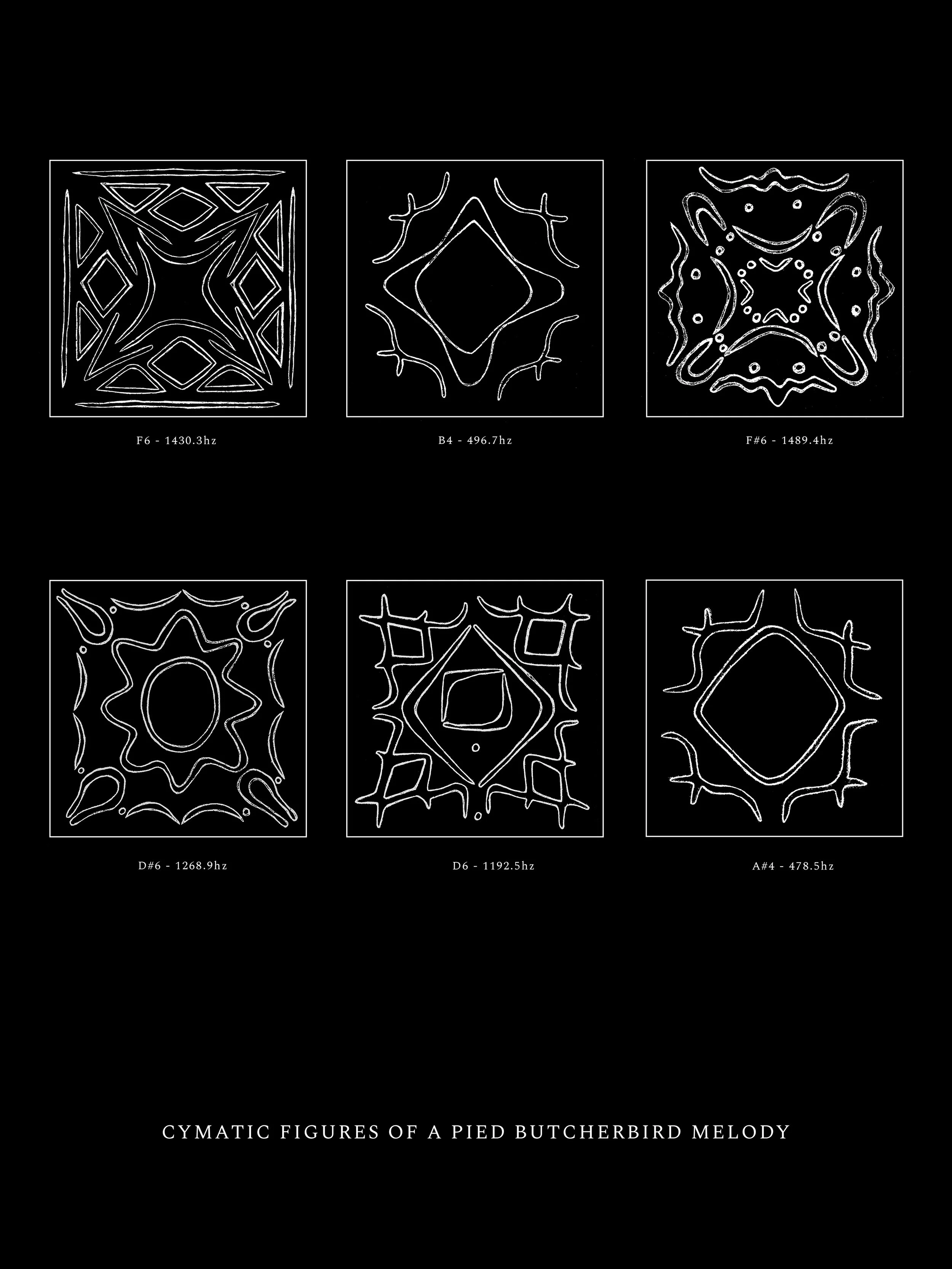
Cymatic figures of the melody of a Pied burtcherbird.
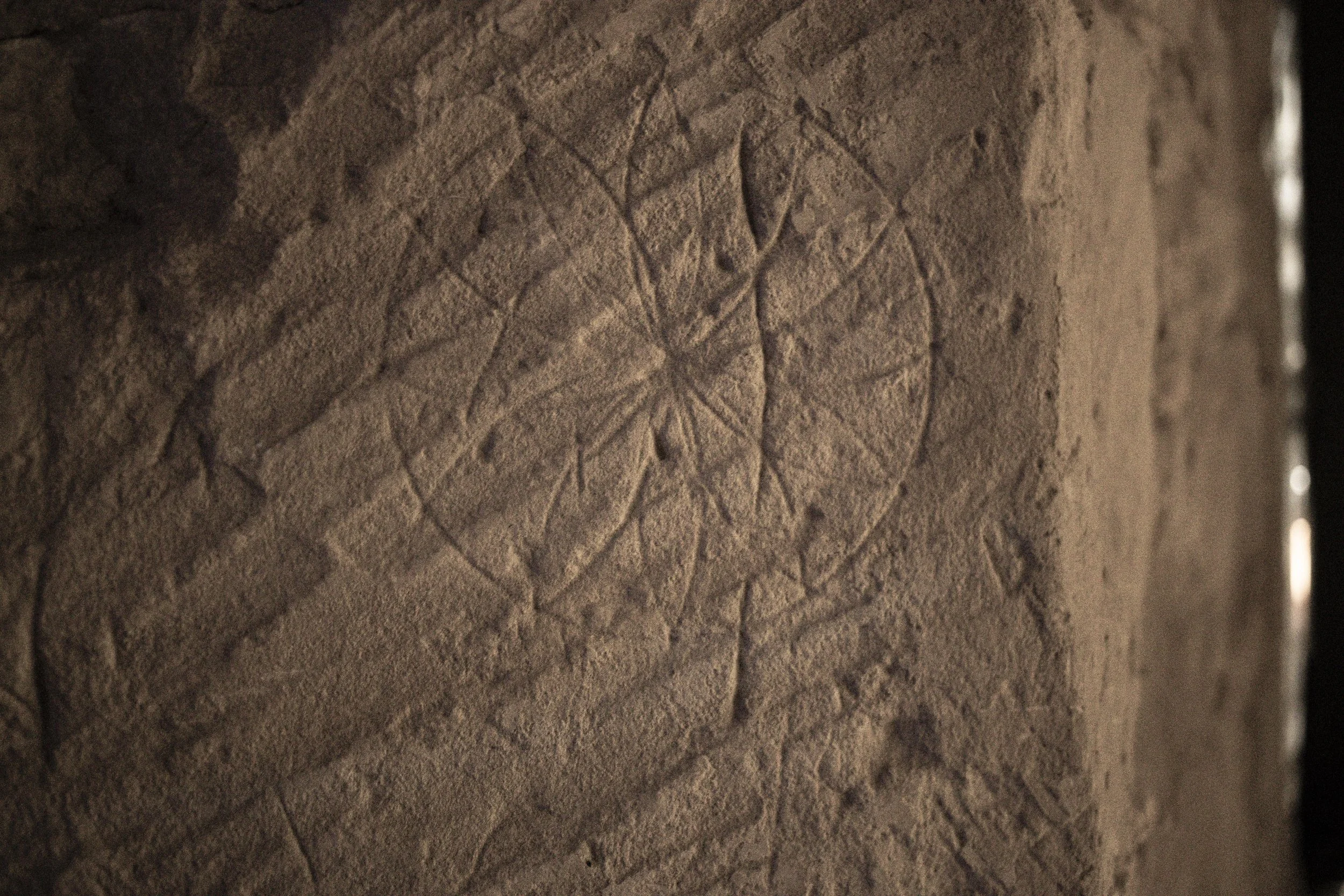
Medieval hexafoil inscribed into the wall of the Messums West barn.
[PROCESS OF PRINTING THE PLATE]
During the course of the 7-week show, salt slowly corroded a 12ft sq steel plate. The salt was spread in the cymatic figure of D#. This plate can be understood as a living artwork - atmosphere into material form. With the vision & expertise of Hannah Davies, Johnny Messum and Andrew & Jane Smith a giant print of this plate was made with a tractor roller at the close of the show.
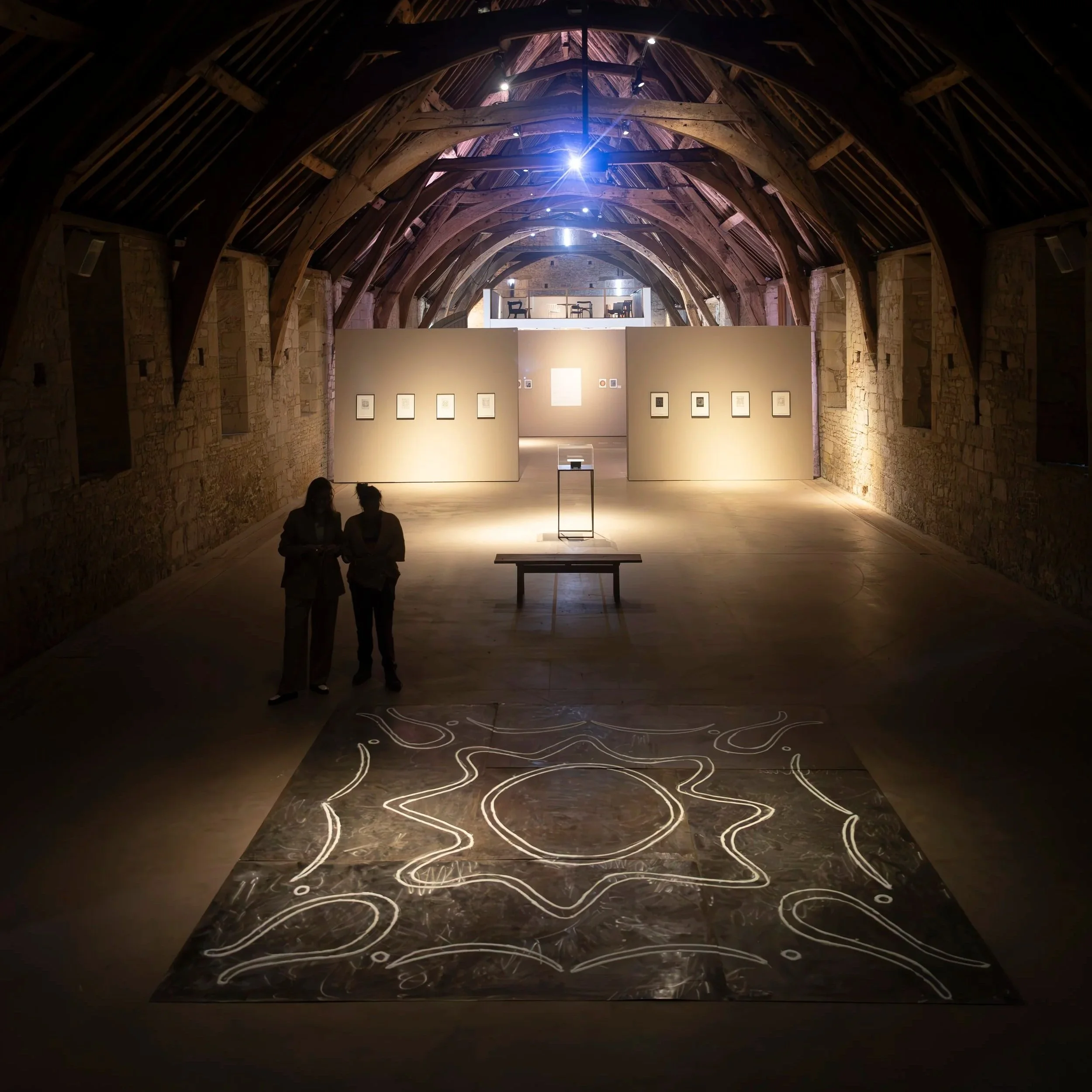
Salt corroding the steel plate in the cymatic figure of D-sharp.
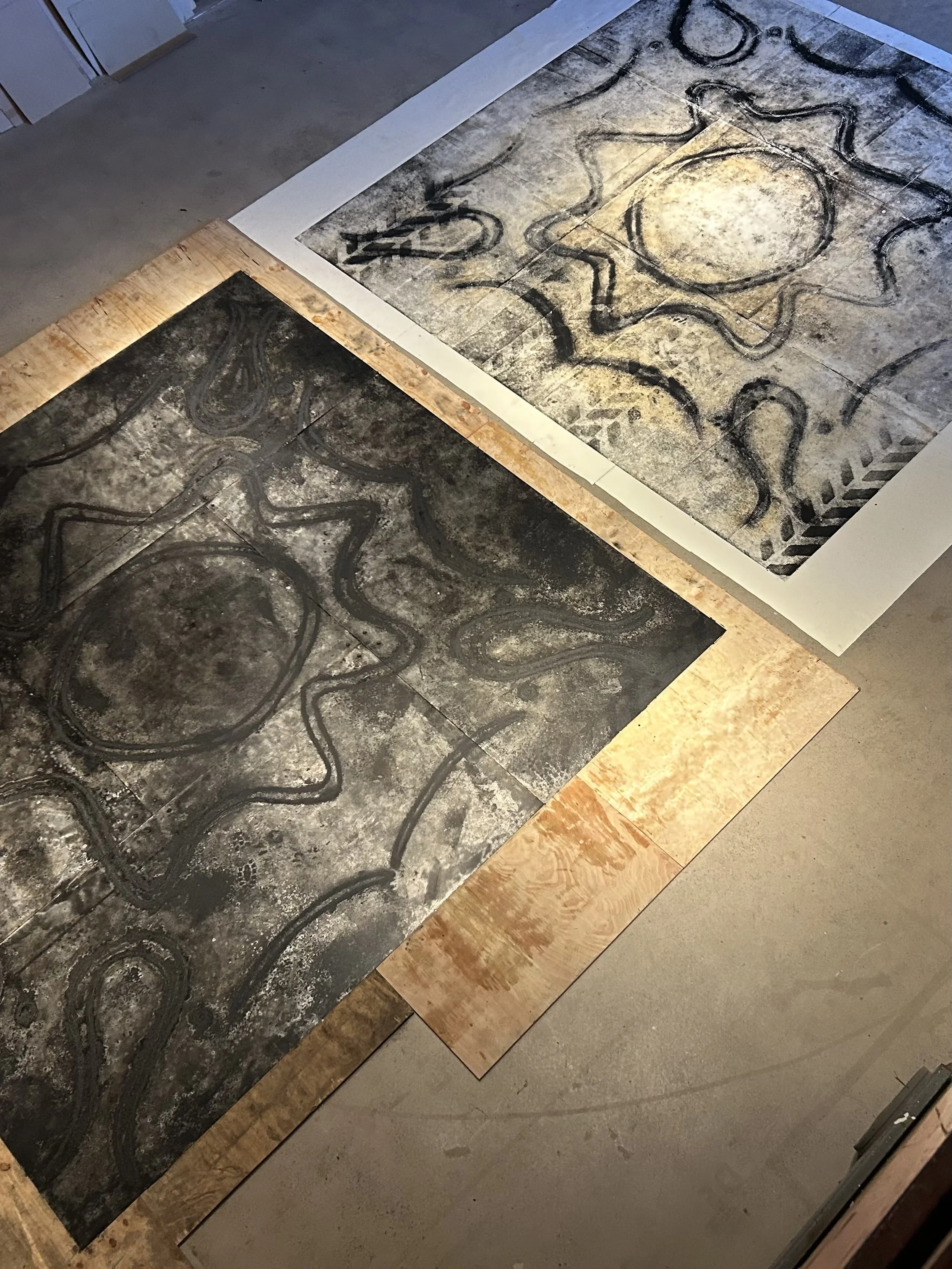
Inked steel plate & print.
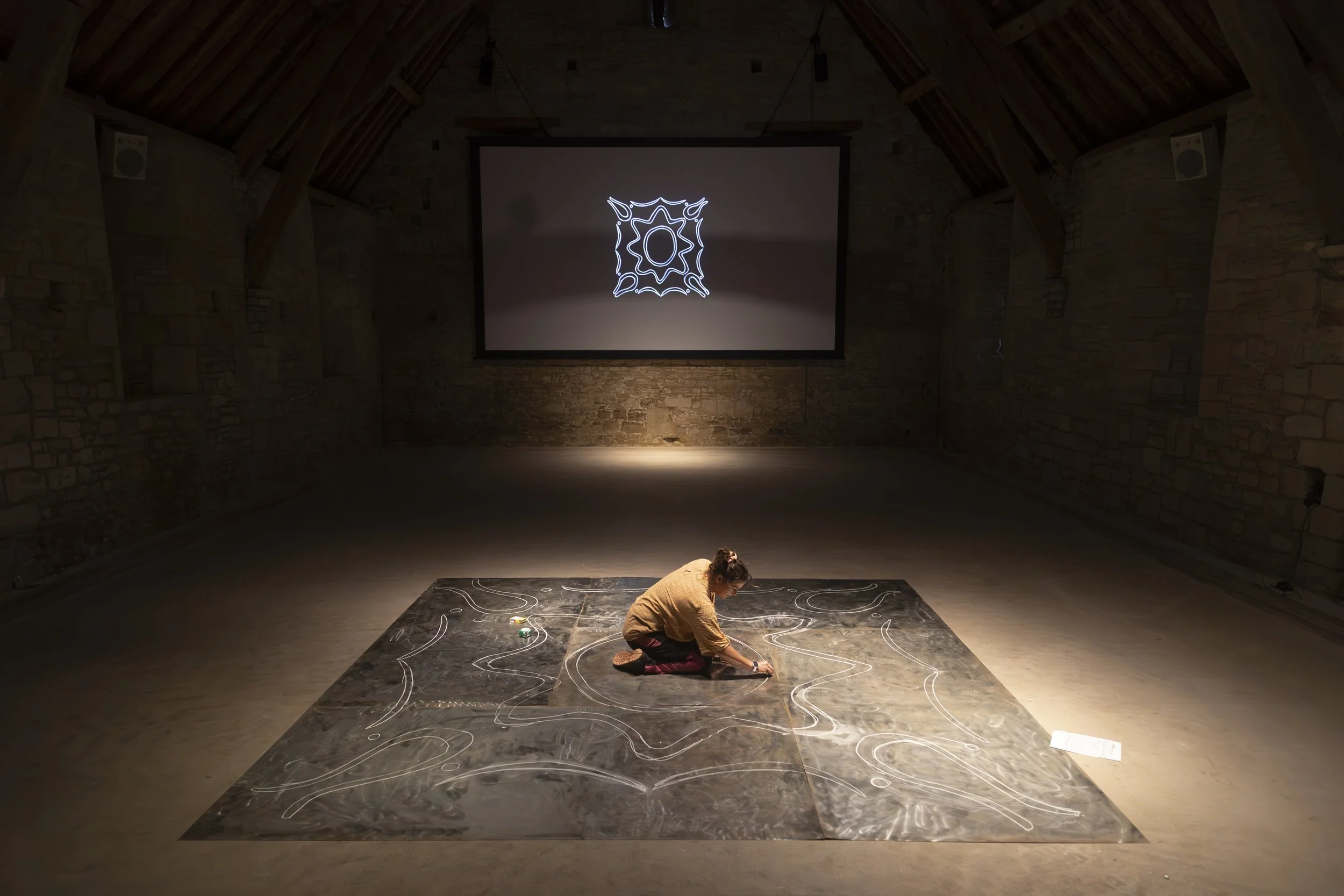
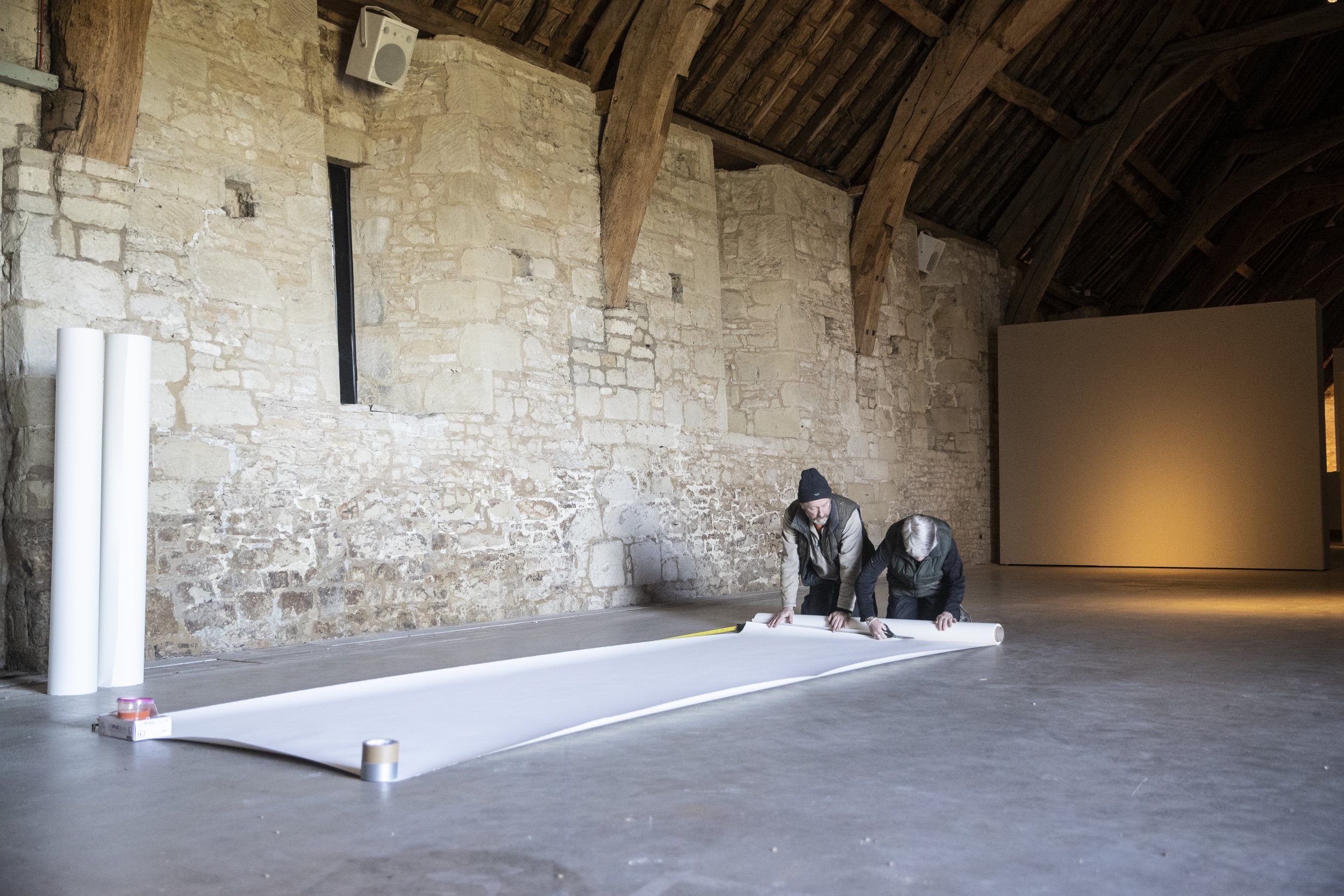
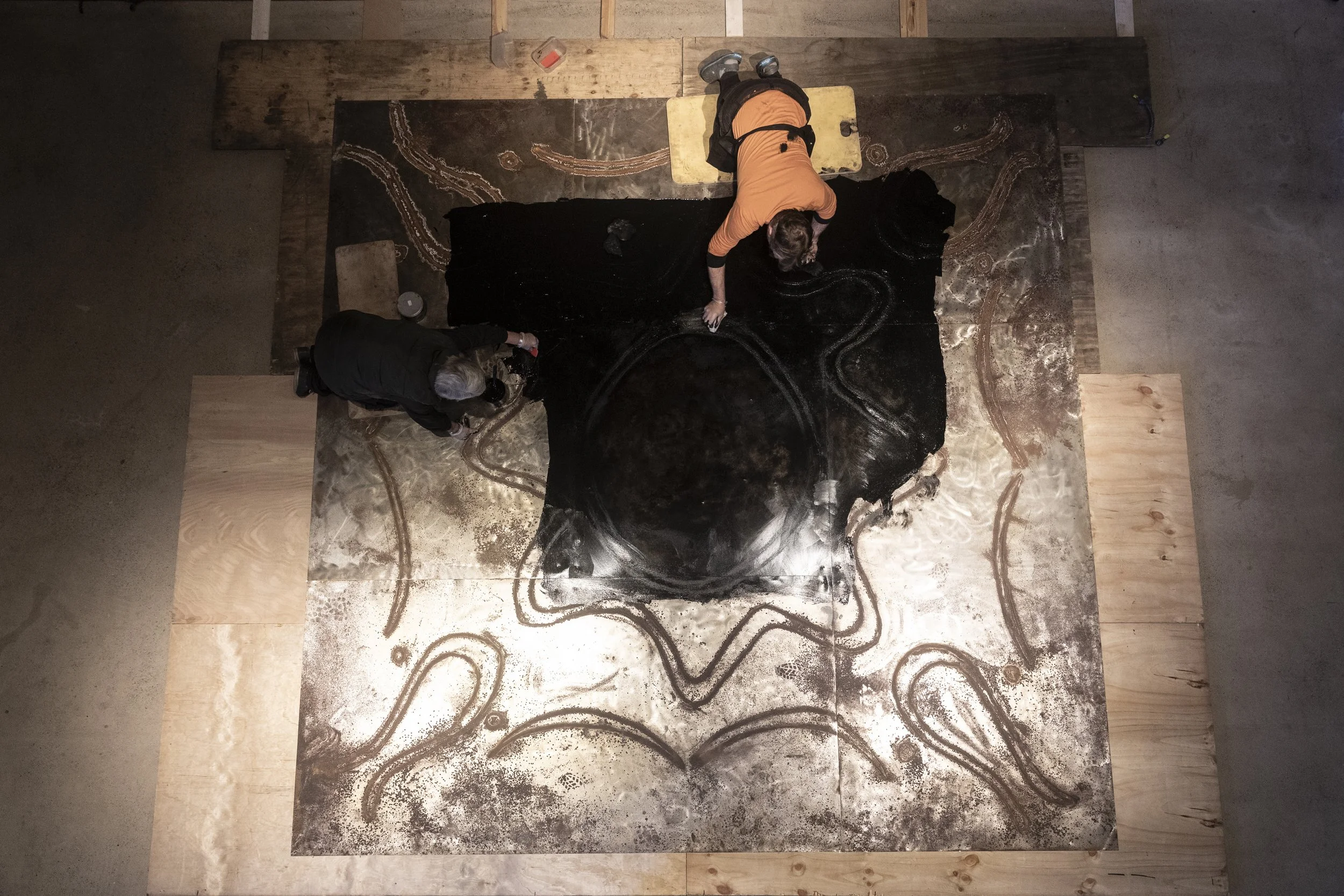
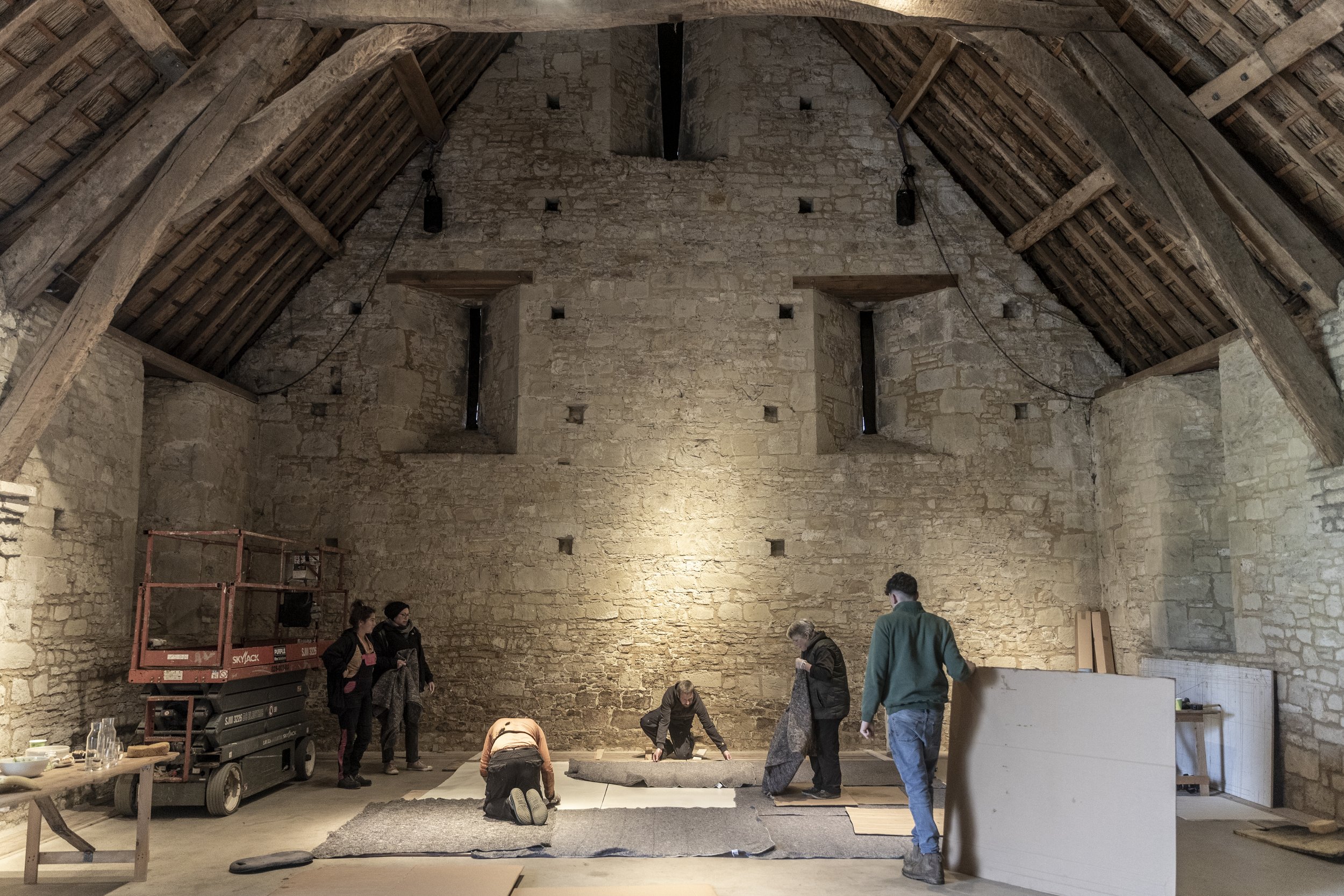

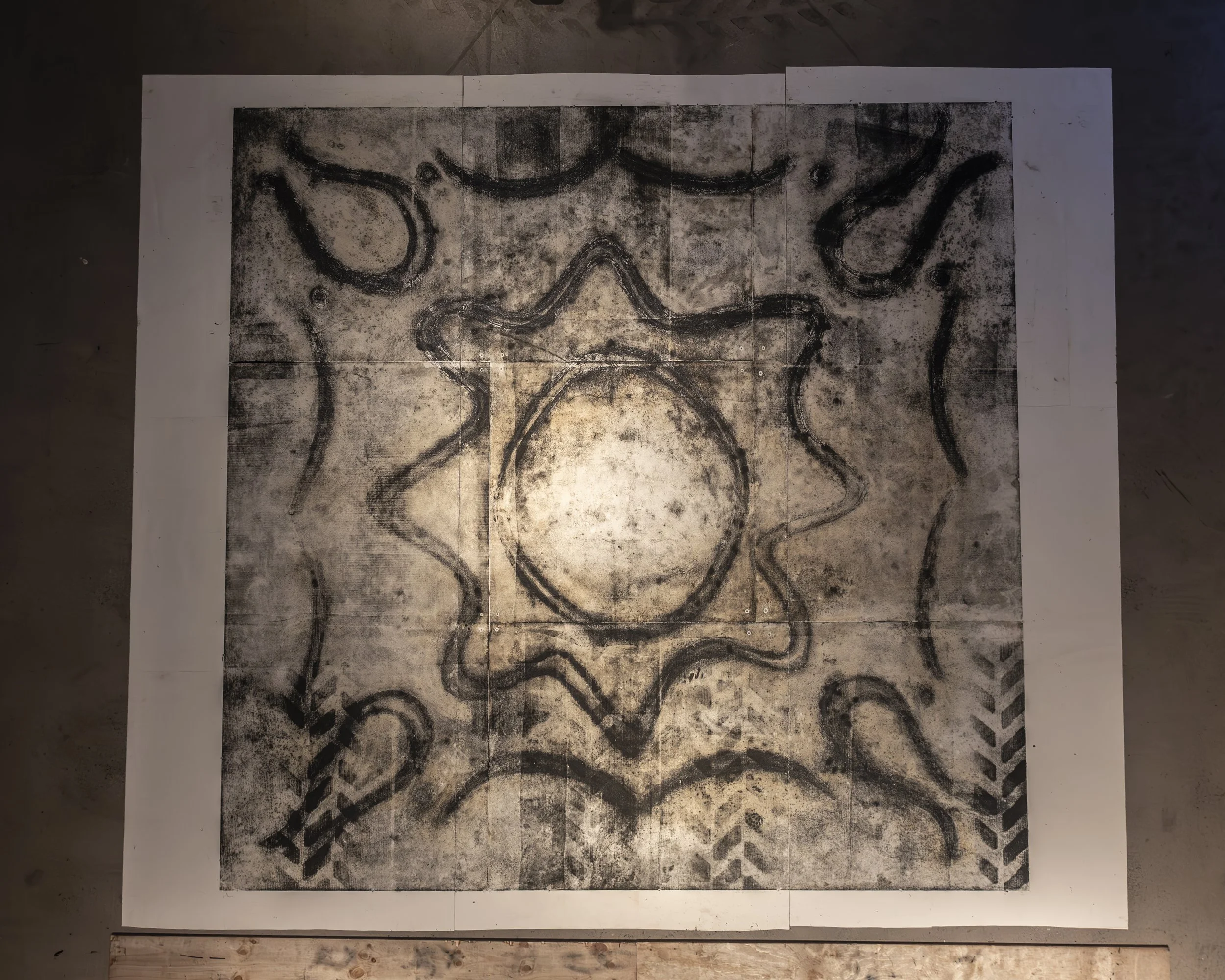
4m square print of steel plate corroding during the show.
[CHROMATOGRAMS]
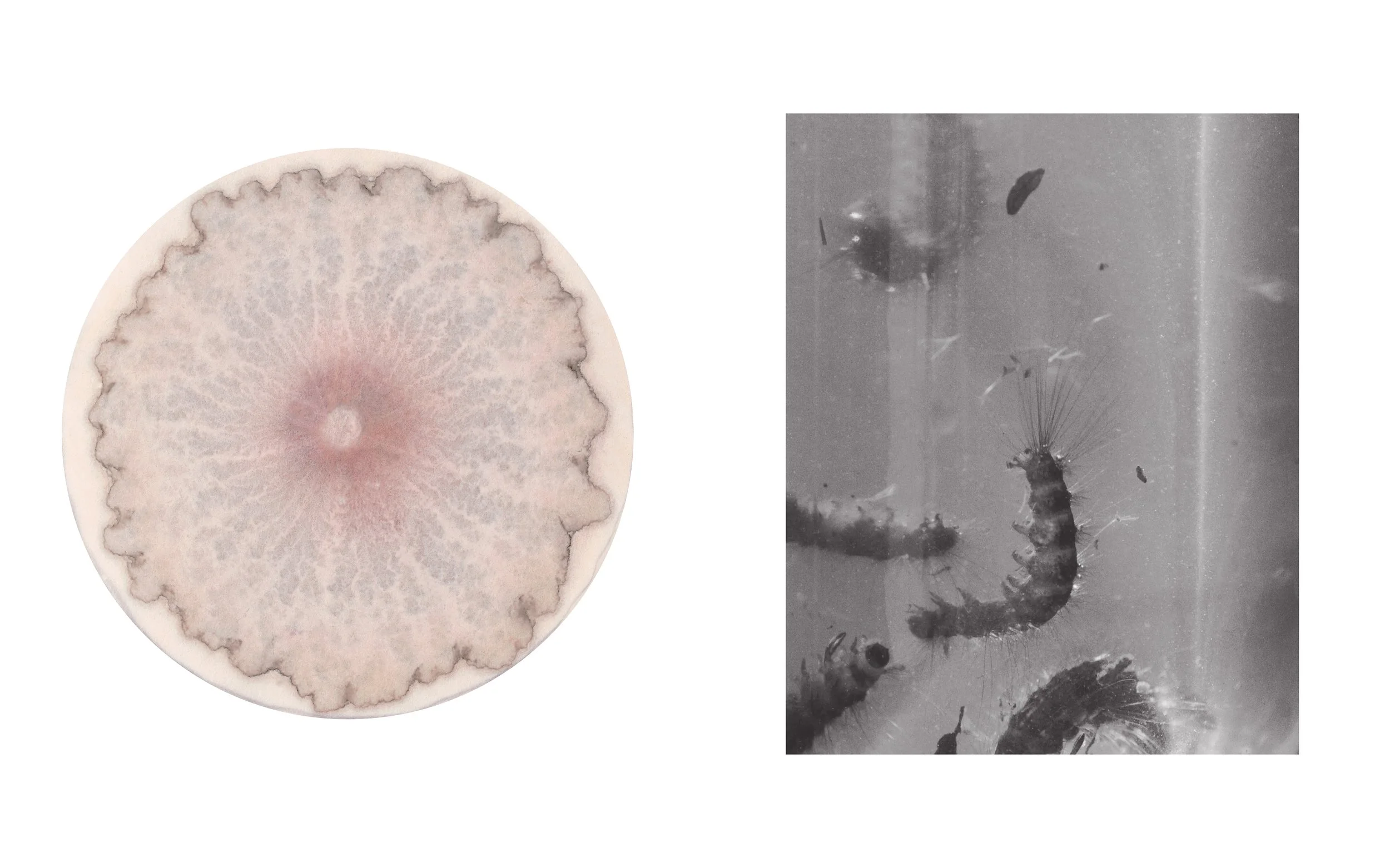
Caterpillars in Metamorphosis, 2023
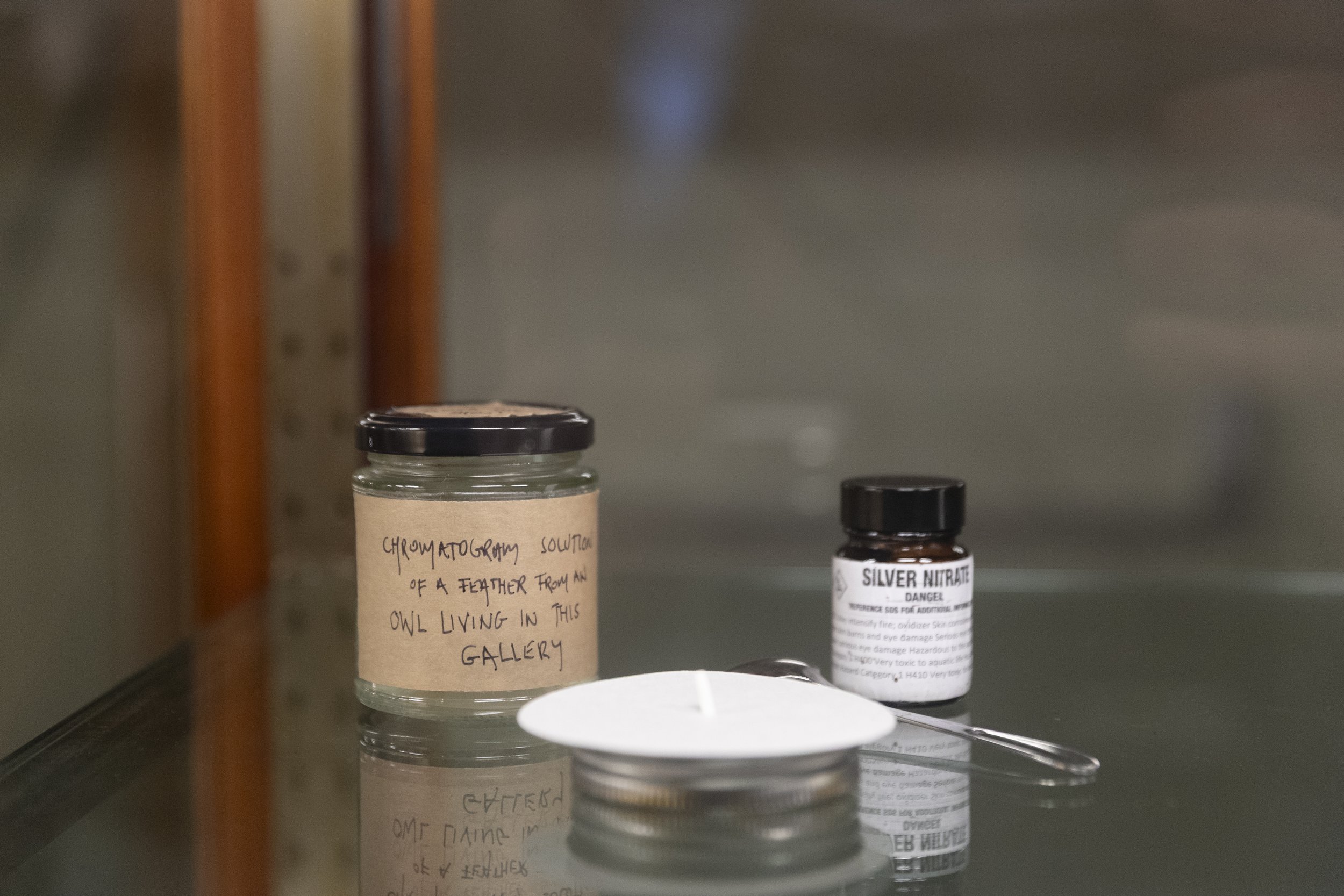
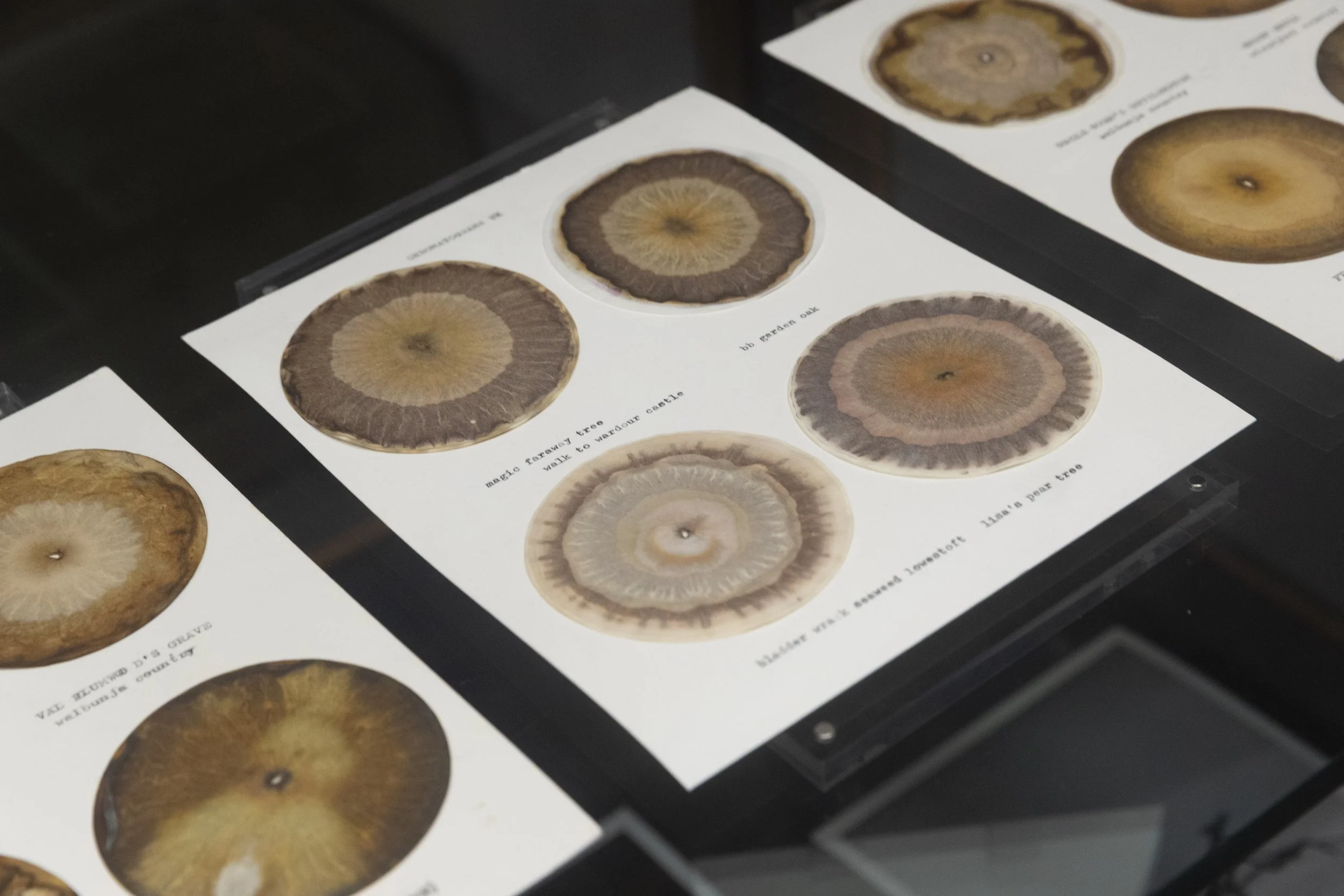
There was a series of chromatograms included in this show - created while on residency at The Corridor Project. Chromatography is a photographic process invented in the early 1900s by Russian-Italian botanist Mikhail Tsvet and has been commonly used by scientists to understand the chemical makeup of soil. This process has the capacity to facilitate the visual expression of a wide range of vibrant matter.
Hawker’s chromatograms, made by grinding flora and fauna and separating their mineral pigments, become abstract portraits of transformation - circular bursts of colour that appear to resurrect their original life force. Through these works, Hawker reinterprets the physical world as a language of energy and memory.
Chromatograms speak to the memories and knowledges inscribed within materials. A chromatogram made with drowned caterpillars found in a trough has the ethereal markings of a moth wing. The chromatogram made with the blood of a red bellied black snake holds the fading echo of a serpent's slither. Disintegration can also be thought of as metamorphosis and sometimes it feels like the essence of a material in not necessarily tied to form.
Two chromatograms were made from snakes - the residue of a red-bellied black snake (whose body was moved off the road after being hit by a car in the night on the road between TCP & Wyangala) and the shed skin of an eastern brown snake. Two serpents hung on silk - which, like the many medieval hexafoils inscribed around the windows and doors of the barn - guarding the entrance of the space.
[PROCESS CABINET]
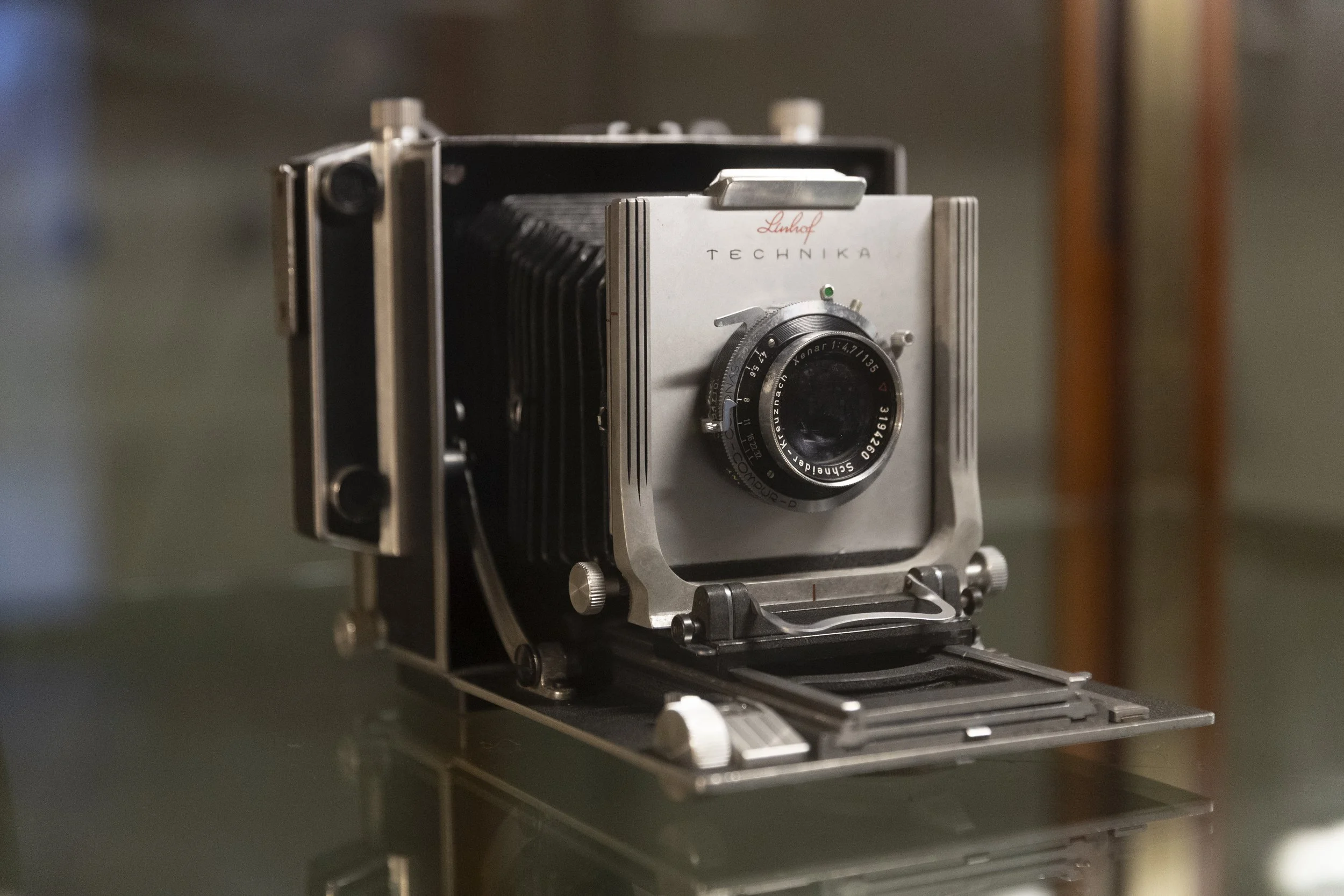
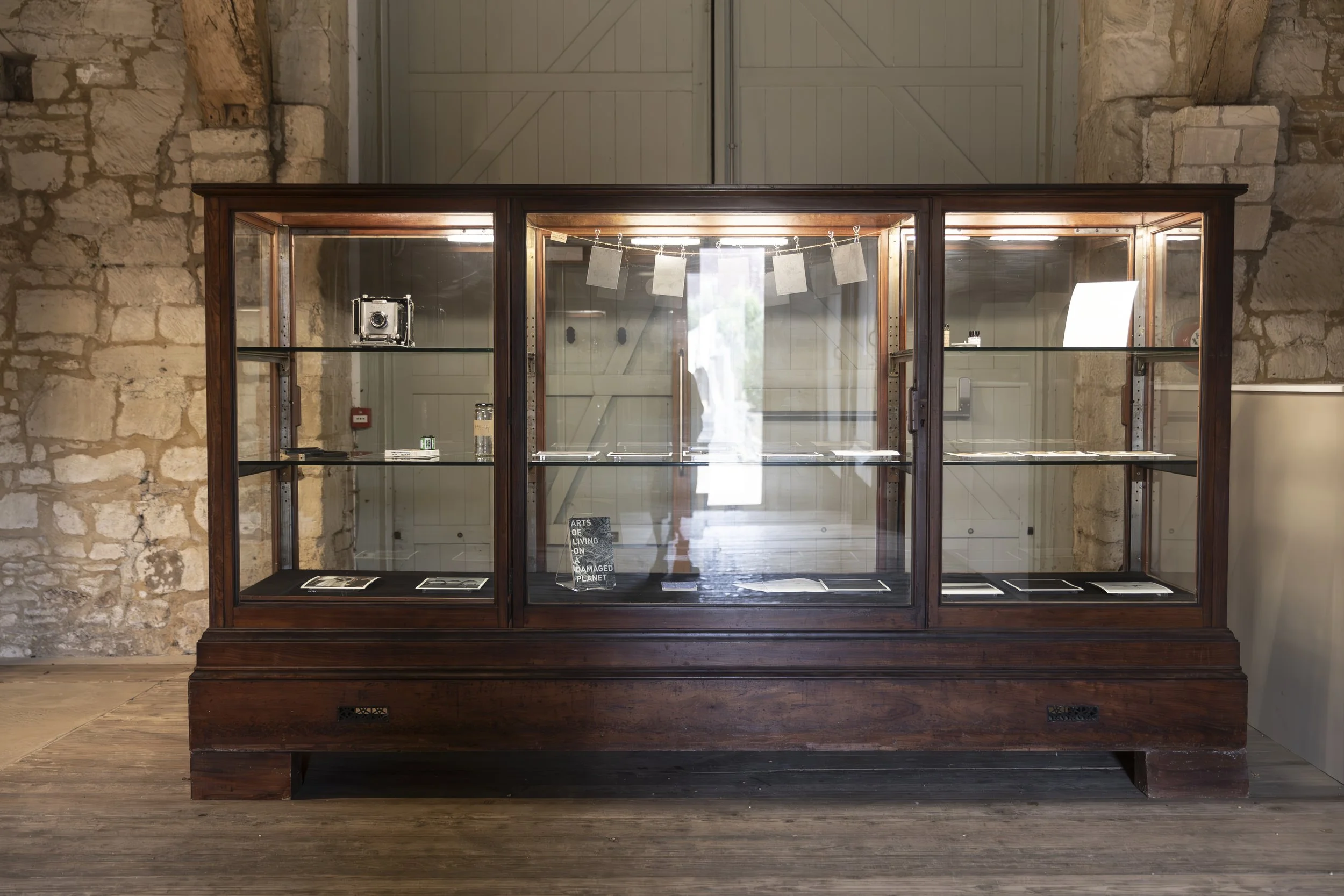
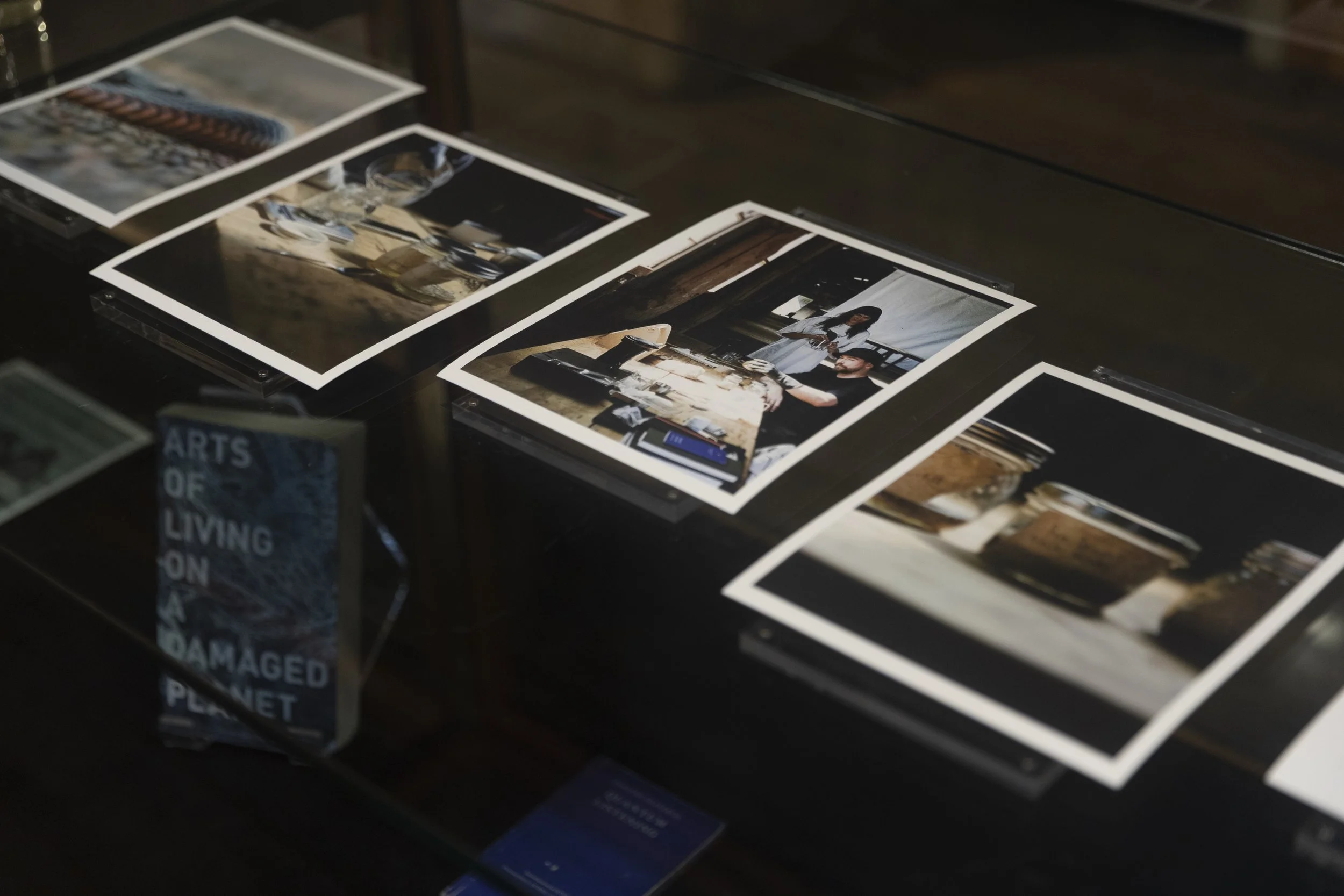
At the entrance of the show stood a reclaimed cabinet originally used to hold displays at the British Museum. The display for Ghosts & Monsters gave further insight into Hawker’s process-led visual research and analogue practices.
Included inside were her cameras, chromatogram archives, reading material and process imagery from her residencies at The Corridor Project.
Copyright © All rights reserved.