photography
this approach to photography is born from an intrigue around the materiality of analogue film and the possibilities this presents. I am interested in how the unpredictable results from more-than human agents can disrupt my authorial control over the image and break open the permanency of the photograph.
In 2019 I moved to Canberra (Ngunnawal/Ngambri Country) and started frequenting my local darkroom at PhotoAccess. When the lockdown began in early 2020, I contacted my friend and darkroom mentor Wouter Van de Voorde. Wouter helped me set-up my own film processing studio, which I operated out of my apartment block’s redbrick laundry.
It was during this quiet COVID months that
photographic works evolve through collaboration with elemental forces - she invites bodies of water, salt lakes, invertebrates and flame to shape their final form. Through her lens, each photograph becomes a site of negotiation between control and surrender, intention and chance — an encounter with the living chemistry of natural materials.
In facilitating these acts of co-creation she is interested in how the unpredictable results from more-than human agents can disrupt my authorial control over the image and break open the permanency of the photograph. When processing film with ocean water the corrosive properties of the salt lifts the silver emulsion and the representational image is rendered vague. However an essence of the site is introduced to the frame as fractals form on the horizon and crystals appear around the disappearing edges. To me it feels the image becomes alive; the crusty tactility of vibrant matter paints its way onto the negative.
In many ways this approach to photography
Her practice challenges the notion of photography as fixed truth.
Instead, Hawker positions it as a mutable and responsive medium,
capable of revealing the invisible forces that shape our
environment. Whether developed in the studio or exposed directly
to the elements, her images hover between landscape and
abstraction, intimacy and vastness.
In Mount Gulaga, as in much of her work, the photograph becomes
a conversation — a meeting point of scientific curiosity and
spiritual resonance. Through these processes of collaboration and
transformation, Hawker illuminates the delicate symbiosis that
binds all forms of existence, inviting us to see the world not as
static image but as continuous exchange.
I have been working with film, inviting more-than human agrnts
When processing film with ocean water the corrosive properties of the salt breaks open the permanency of the photograph. The ocean water lifts the silver emulsion and the representational image is rendered vague. However an essence of the site is introduced to the frame as fractals form on the horizon and salt crystals appear around the disappearing edges. To me it feels the image becomes alive; the ocean water an example of vibrant matter which paints its way onto the negative.
A psychedelic take on a Sugimoto seascape. A glittering, mysterious, collaborative self-portrait.
In many ways my approach to practice is a response to the extractive legacy of the Western approach to landscape photography. In my work I am interested in how I might create conditions which facilitate the expression or voice of the place, material or being I am working with. The process in which the work unfolds is unpredictable and not one in which I can anticipate or control. The final outcome feels like a dialogue between me and these co-creators.
When processing film with ocean water the corrosive properties of the salt lifts the silver emulsion and the representational image is rendered vague. However an essence of the site is introduced to the frame as fractals form on the horizon and crystals appear around the disappearing edges.
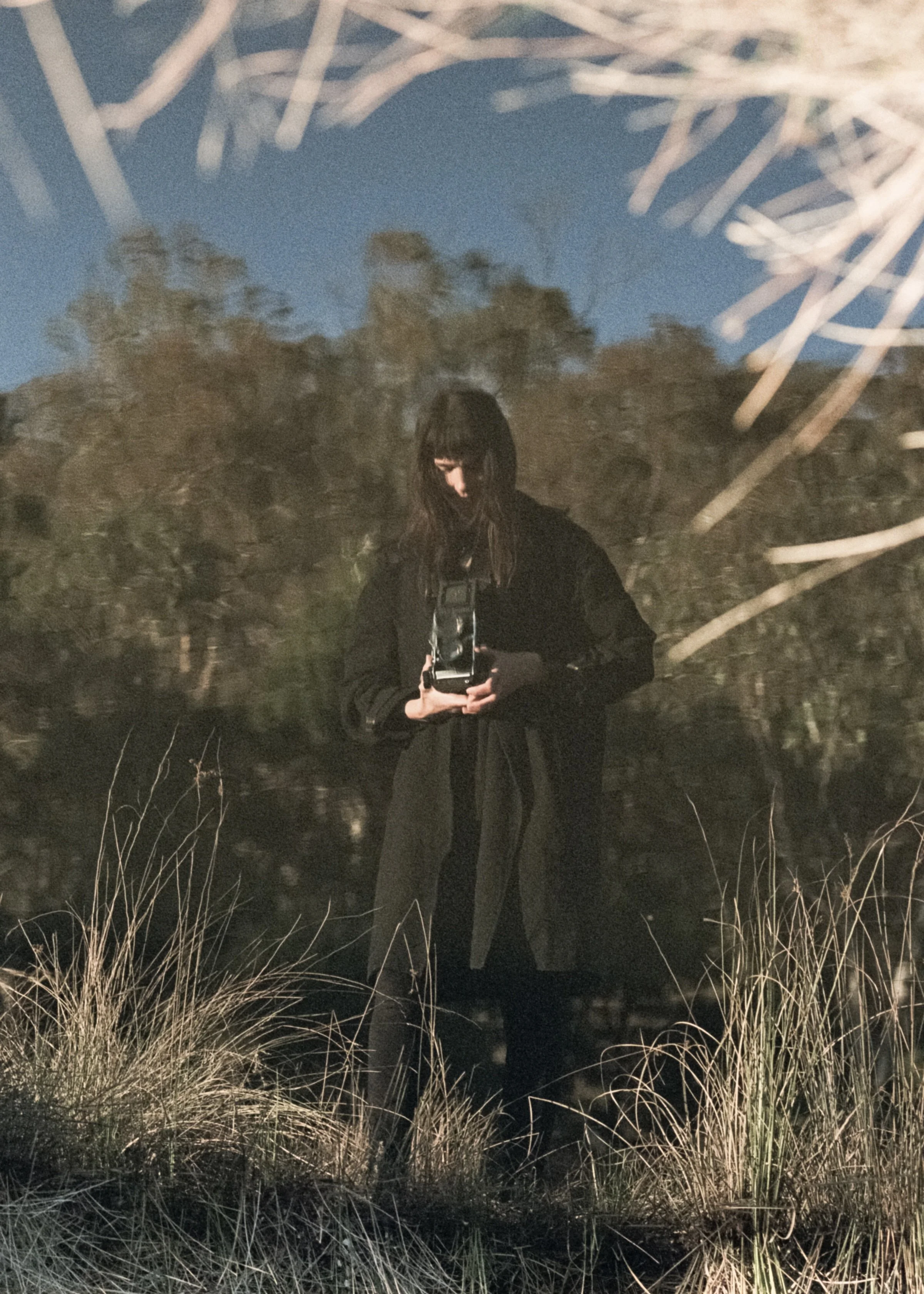
When processing film Hawker is intrigued by its materiality and the possibilities that presents. Much of her work is co-created with more-than human agents, whose unpredictable input disrupts her authorial control over the image. Many of the works in this exhibition were processed with water collected from site. Salt fractals form across works created with ocean water, textured ripples rise up a medium format photograph developed with the muddy lake water of Ngungara (Lake George) and images of storm clouds taken from the top of Mount Ainslie were developed with the rainwater that fell later that day.

“The photograhpic surface registers time, mineral activity and decay — a topography formed through corrosion, crystallisation and the slow alchemy of matter. This is characteristic of Hawker’s practice: she treats the photograph as a living membrane, one that absorbs, reacts and records traces of the world it encounters.

processing film with Kati Thanda-Lake Eyre | photo credit: Anna Hutchcroft.
“Hawker has a very expanded idea of the studio. A set of open lipped glass jars for collecting water, lines of string for hanging negatives to dry in the wind, thick ragpaper, a wide brimmed hat and sturdy boots to clamber, a detailed diary of notes to record activity, a laptop and the cameras; the medium format 6x6 Mamiya C330 that forces the creation of a view by looking down into a reverse reflection and the large format 4x5 Linhof Technika.”
Salt, 2023 | Exhibition Essay
Virginia Rigney, Senior Curator CMAG

Co-creating imagery with two hives of honeybees:

Conversation with bees | Goulburn Regional Art Gallery
Image credit: Silversalt Photography
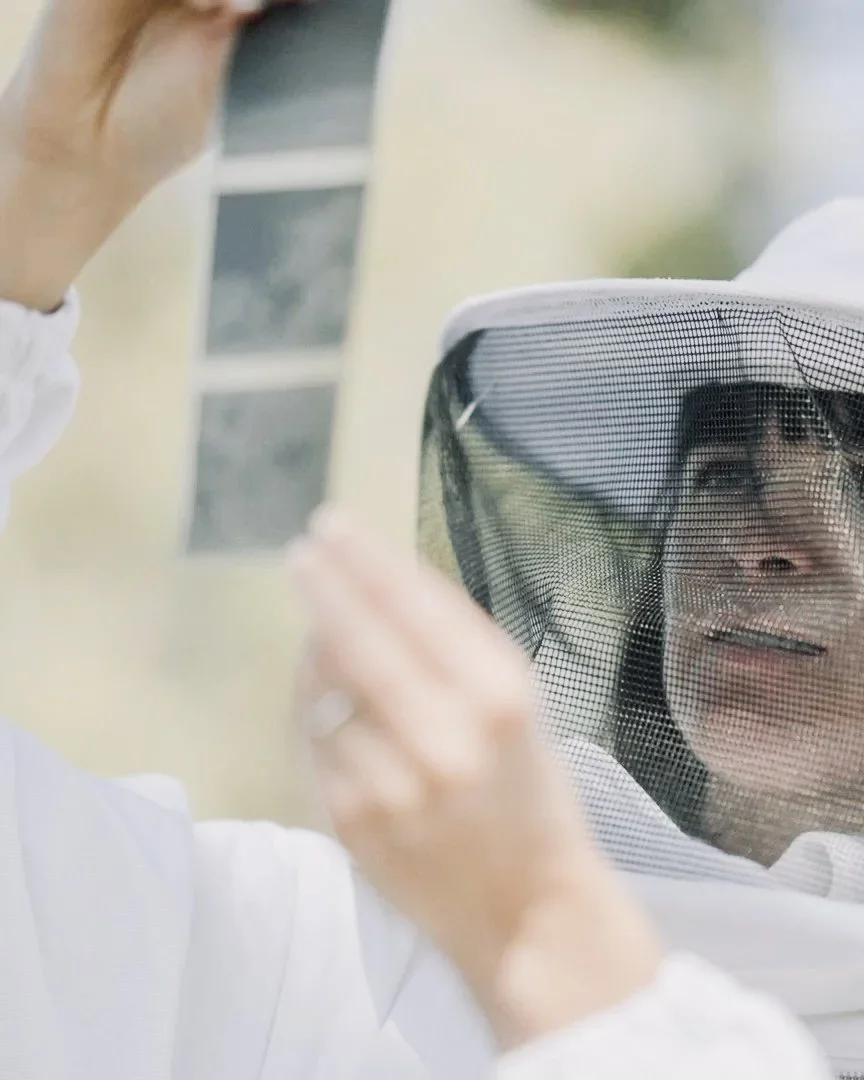
6x6 negatives for the hives | photo credit: Rich Mockler
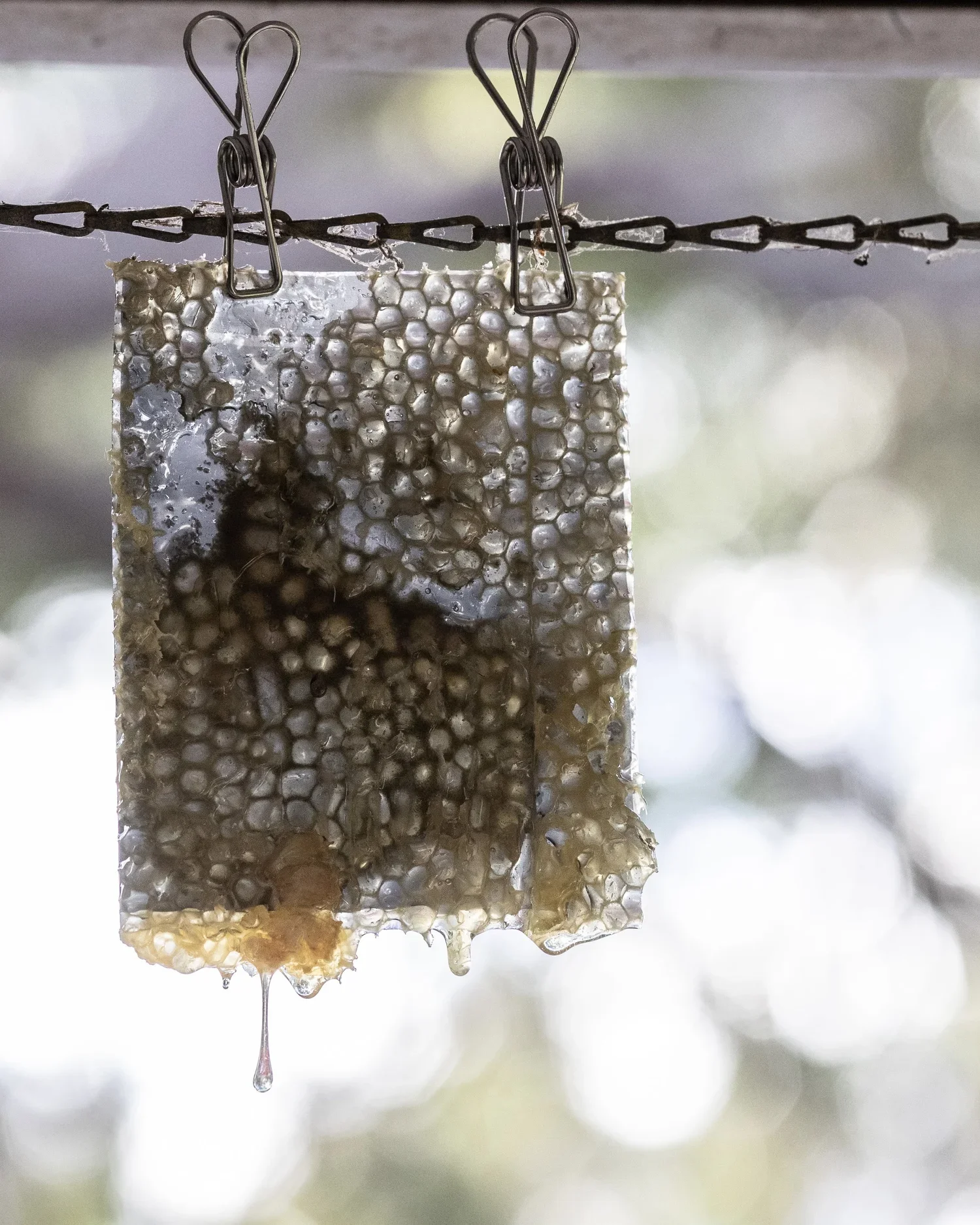
4x5 negative hanging in the studio
Copyright © All rights reserved.