chromatogram commissions
Chromatograms are the visual expression of vibrant matter - a self-portrait of the materials being used to create them.
The process of chromatography was developed by Russian-Italian botanist Mikhail Tsvet in 1900. While commonly used by scientists to understand the chemical makeup of soil, I have been testing the process’ ability to facilitate the visual expression of a wide range of natural materials. When making chromatograms I takes the role of a facilitator - expectations must be set aside, as the hues and patterns that form as the solution spreads over the silver nitrate-soaked paper cannot be predetermined or controlled.
Chromatography speaks to the energetic resonance or memory inscribed within materials. A chromatogram made from drowned caterpillars found in a trough has the ethereal markings of a moth wing. A chromatogram made from dehydrated placenta feels like life bursting forth out of an abyss. Chromatograms made from human ashes are effervescent and unique - every individual will express themselves differently, even from beyond the veil.
Disintegration can also be thought of as metamorphosis and sometimes it feels the essence of a material is not necessarily tied to form. The process of chromatography gives voice to the essence that has survived the many alchemical transitions it might pass through.
If you are interested in commissioning a chromatogram please get in touch for details.
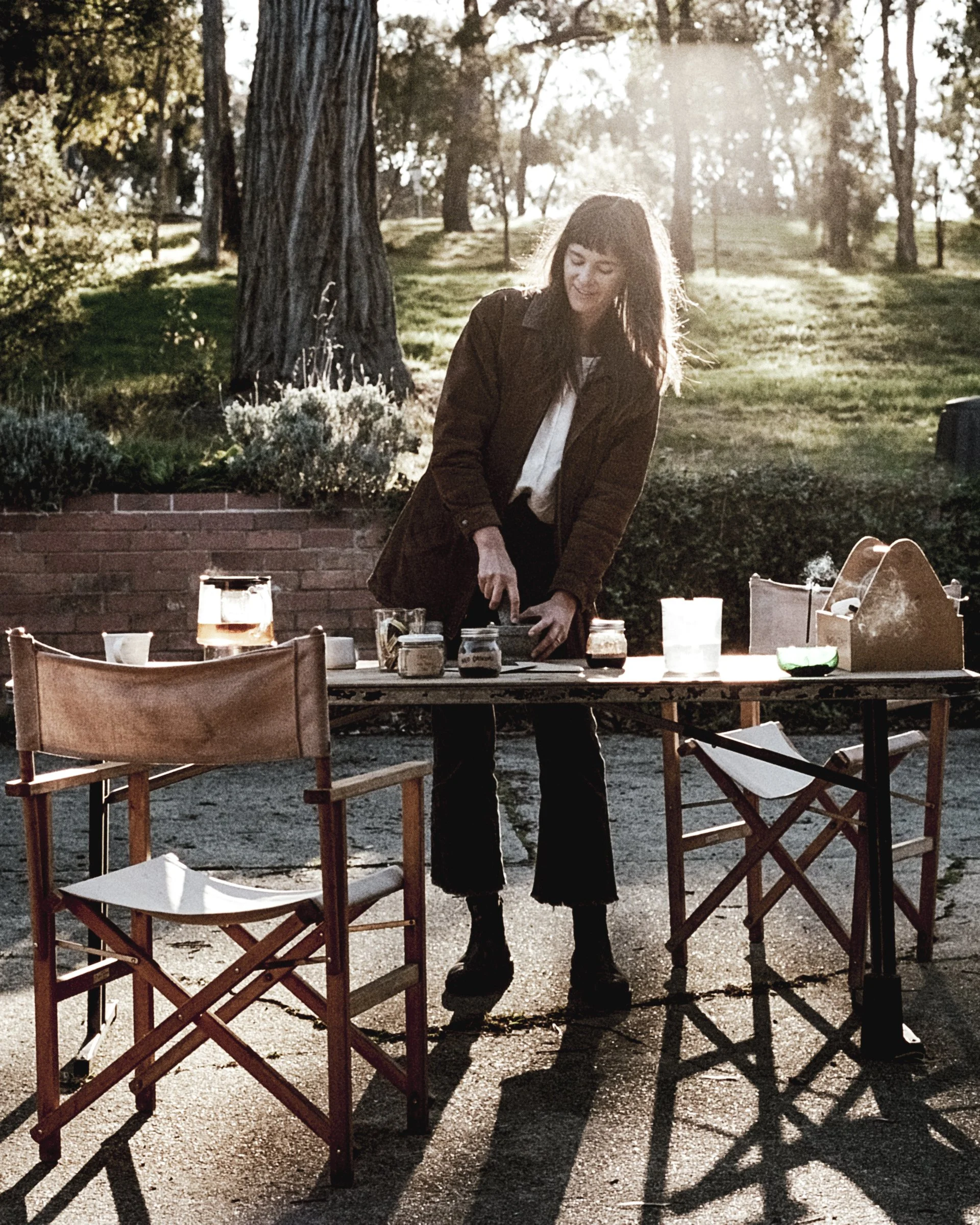
photo credit: Sami Harper
“Hawker’s chromatograms, made by grinding flora and fauna and separating their mineral pigments, become abstract portraits of transformation - circular bursts of colour that appear to resurrect their original life force. Through these works, Hawker reinterprets the physical world as a language of energy and memory.”
Ghosts & Monsters, 2025 | Catalogue Essay
Gabriele Taraseviciute
A Chromatogram of seaweed from Sydney Harbour, 2024
Gadigal & Birrabirragal Country
A Chromatogram of Casuarina tree, 2022
Walbunja Country
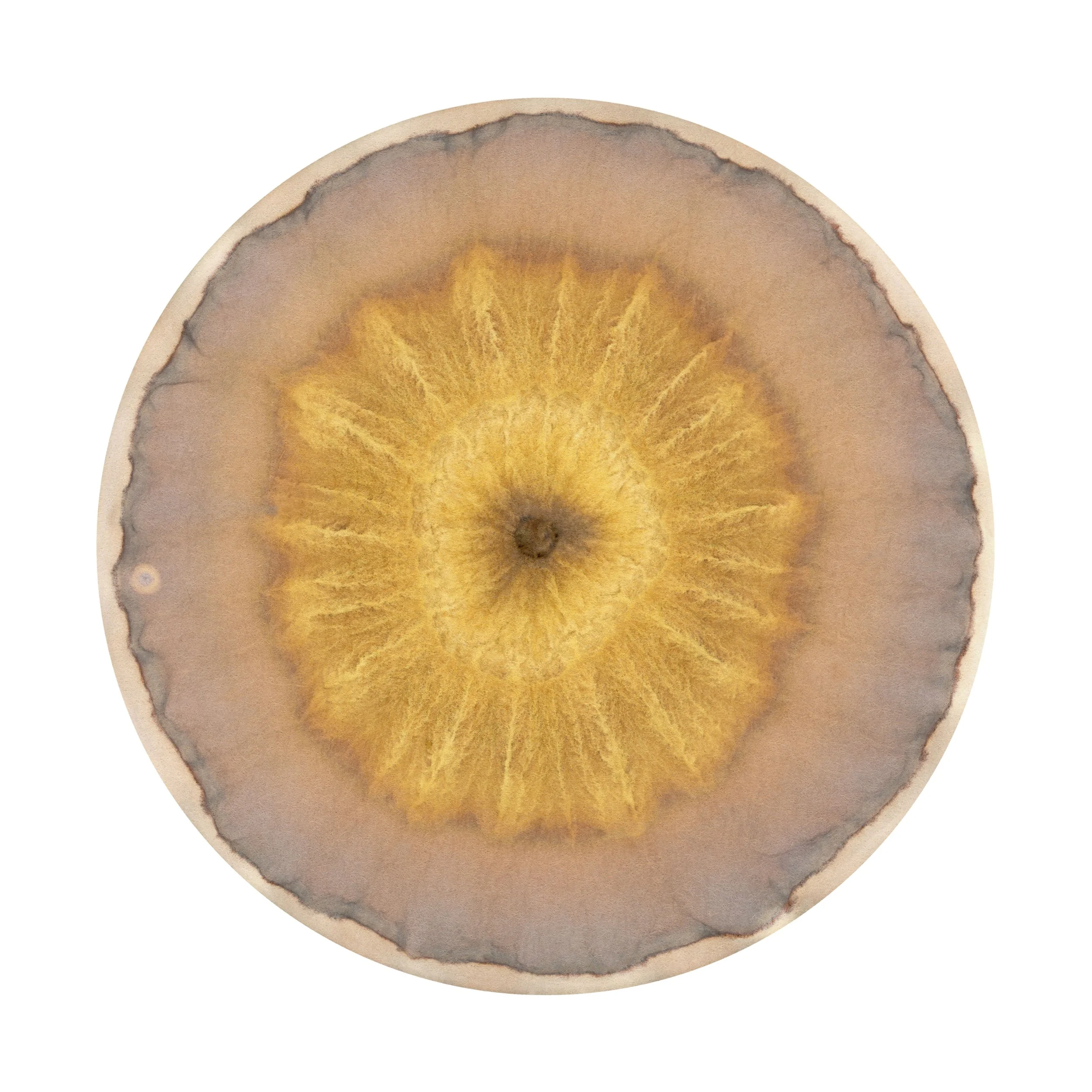
A chromatogram commission, 2026
Angophora Leaf - Dharug and Darkinjung Country
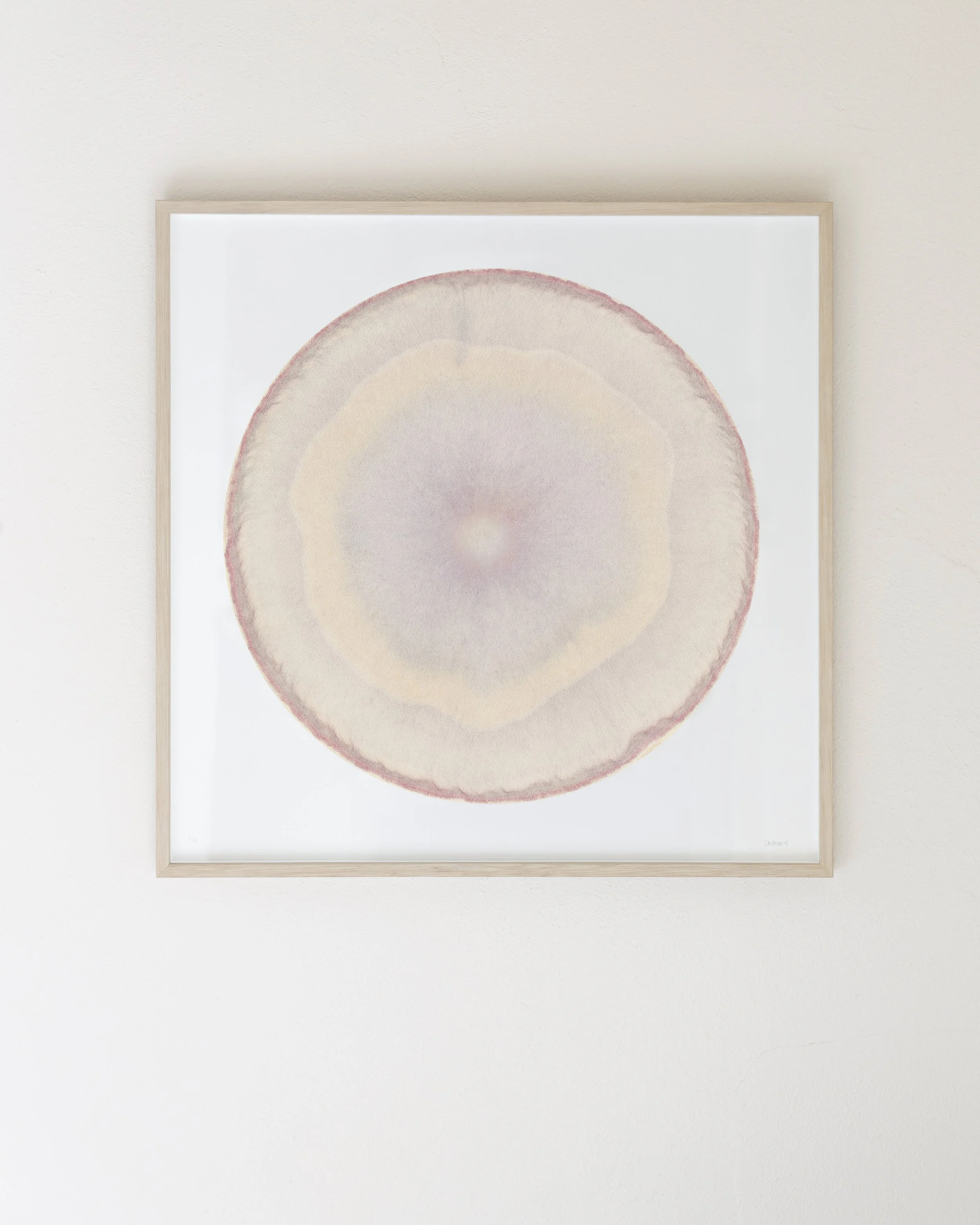
A chromatogram commission, 2023
Fern’s ashes
“Chromatography, in Hawker’s hands, becomes a kind of requiem, a post-mortem metamorphosis that distills the subject into its elemental components. These pieces are at once memento mori and meditations on the intangible, infinite, and mutable nature of existence. Her work gestures toward a spiritual unity and an unseen connectivity residing in every insect, tree, and molecule, revealed only through an interaction between natural and scientific-humane processes. And this connection can only be resuscitated through careful inspection and in-syncness with her art as a viewer.”
Basta Magazine Feature
Iker Veiga, 2025
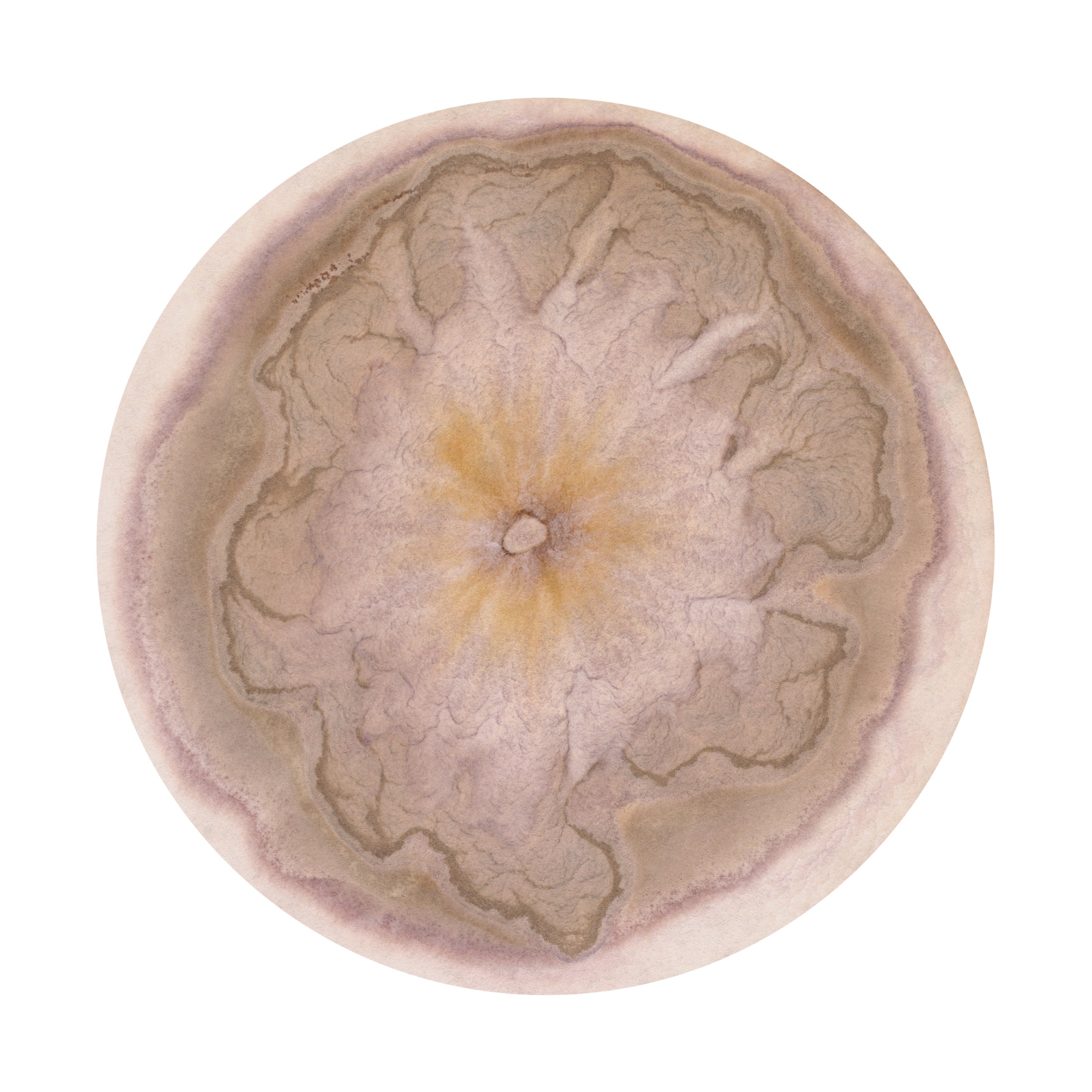
A chromatogram commission, 2026
Sylvie’s placenta, her mother’s milk & a leaf from their garden
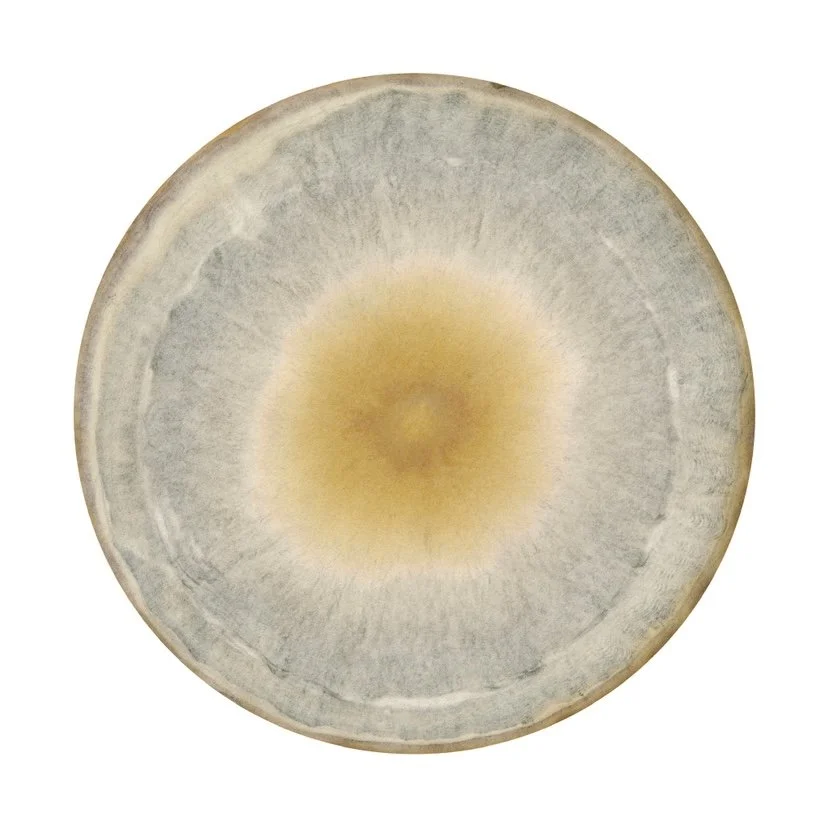
A chromatogram commission, 2023
Jamie’s ashes

A Chromatogram of Val Plumwood’s Grave, 2023
Walbunja Country
chromatogram of Sybil’s placenta
~ mid afternoon. Cool weather after a heatwave. Waning moon - 6 days to new. Listening to Black Thunder by Brittany Davis - Marcus (Sybil's dad) shared this album with me the other day. It is an album NPR has described as 'dripping with presence.' As the chromatogram processes, a golden glow fills the studio. Shadows dance on the wall ~
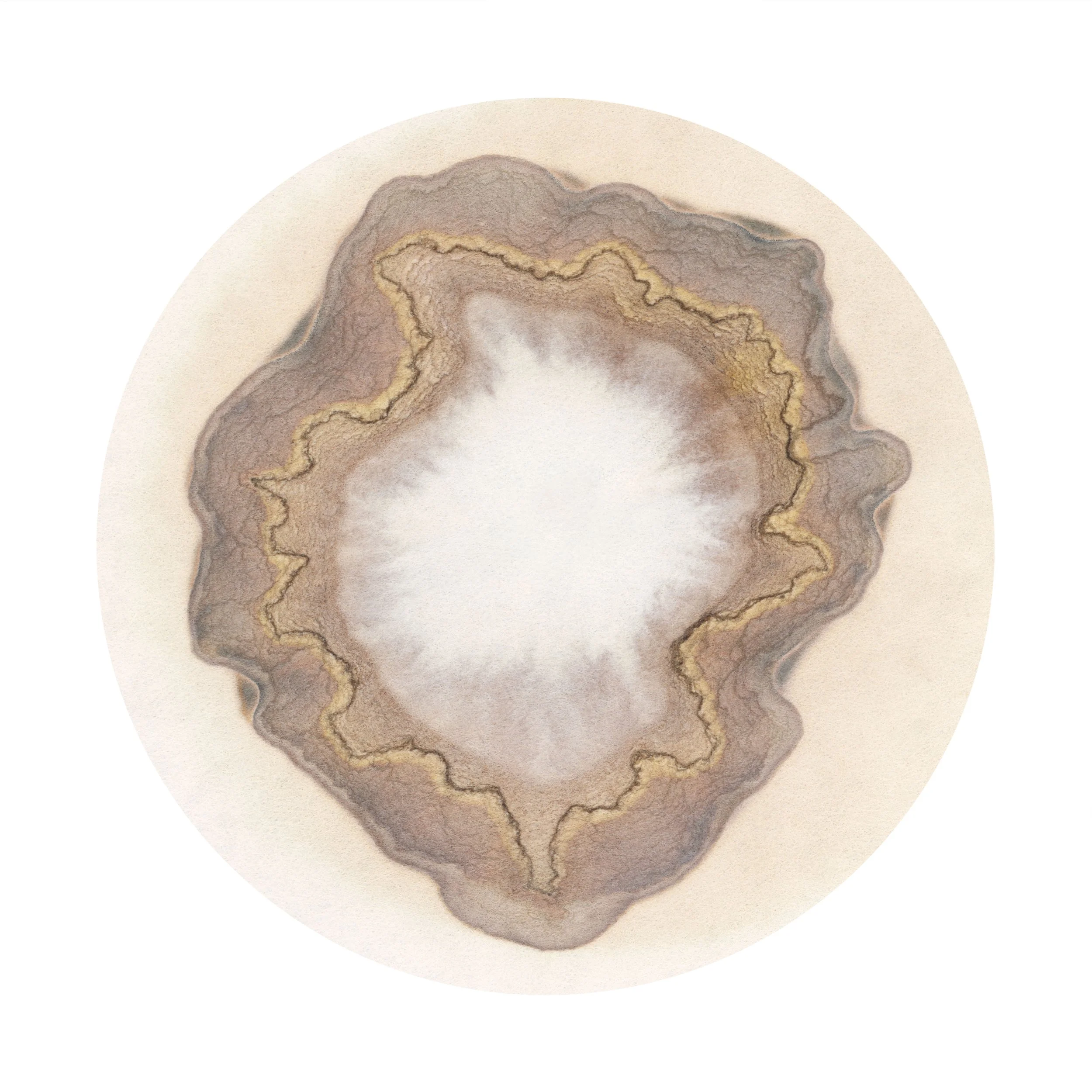
A chromatogram commission, 2026
Sybil’s placenta
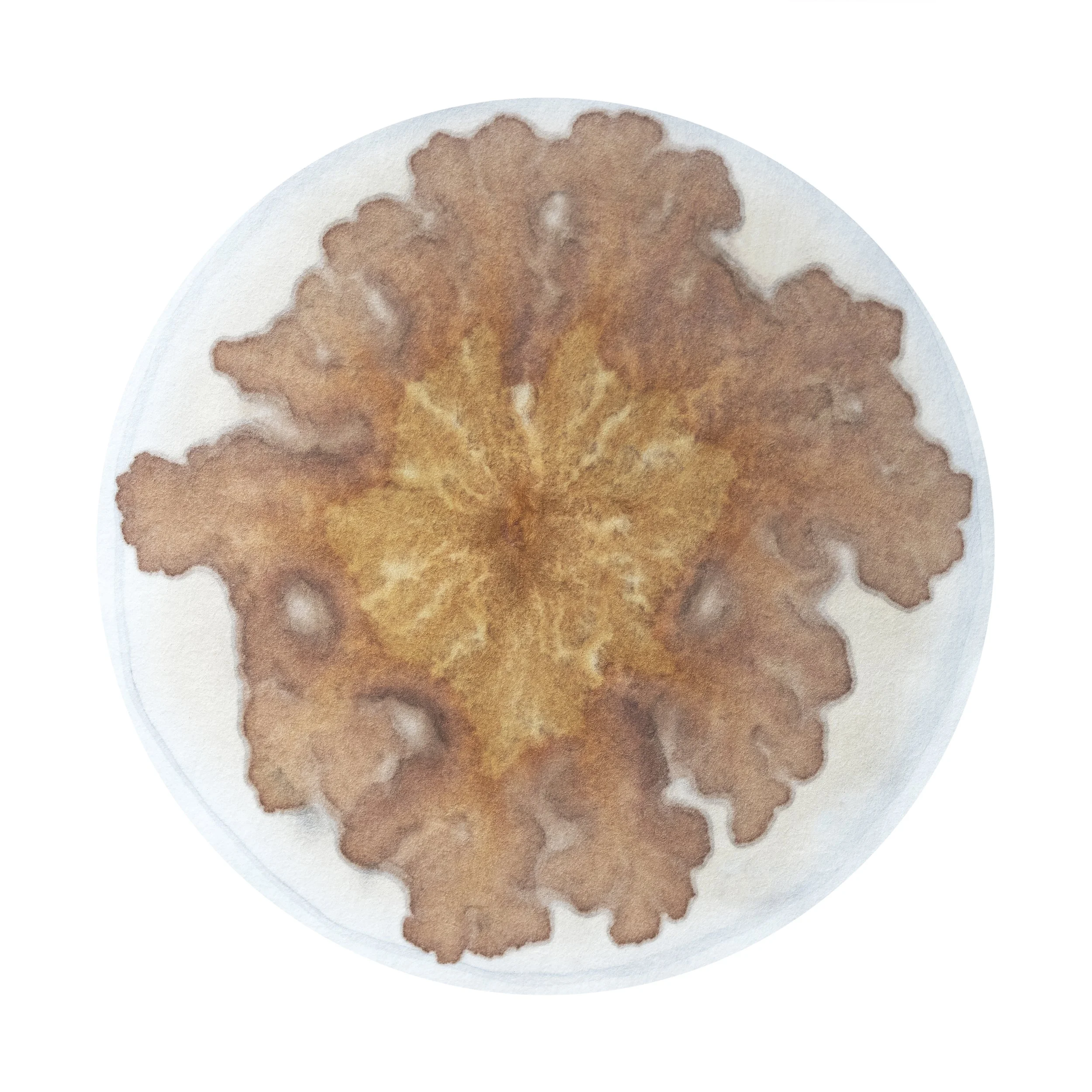
A chromatogram of seaweed from Dunwich, 2025
Suffolk, UK
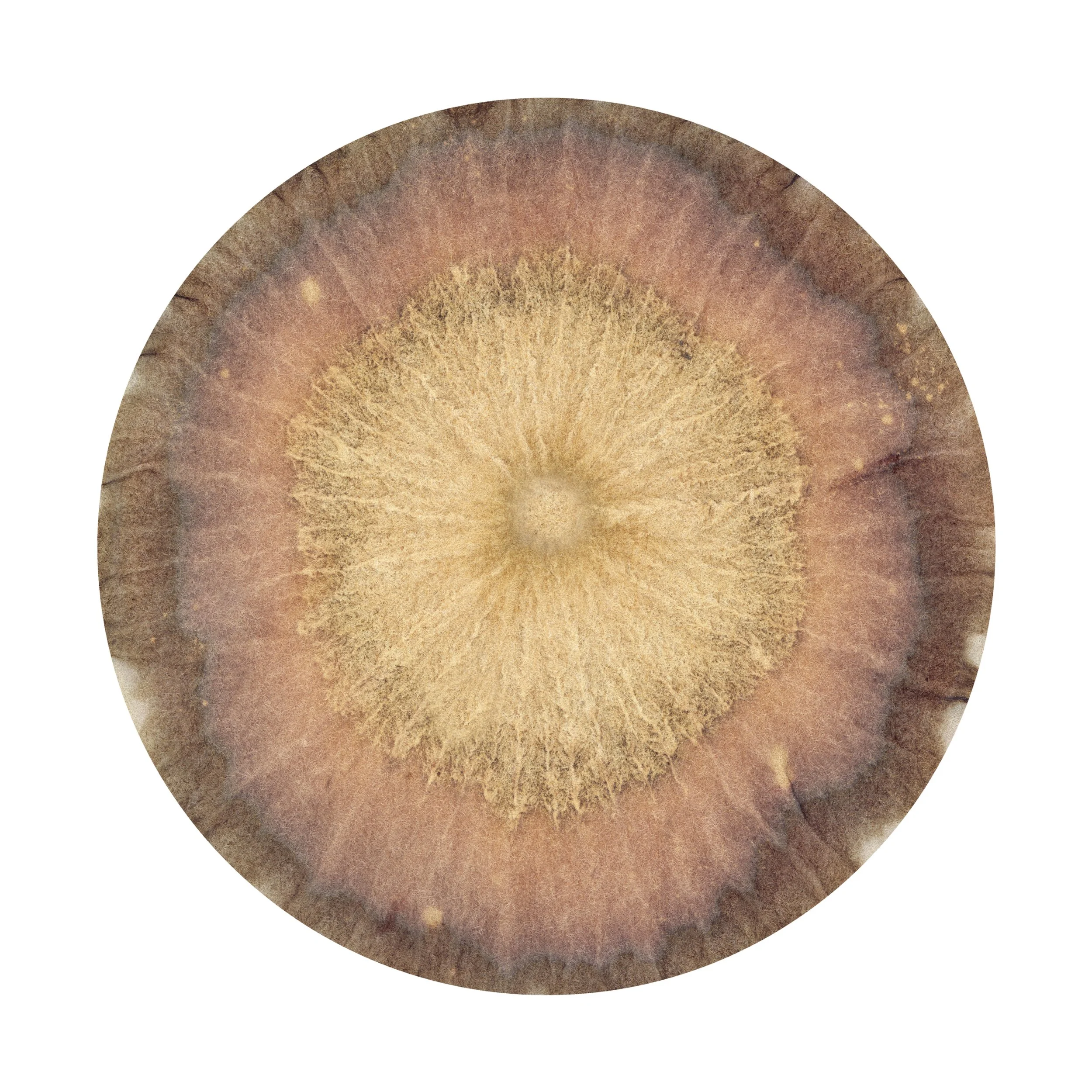
A chromatogram of sinkhole in Takayna, 2023
Palawa Country
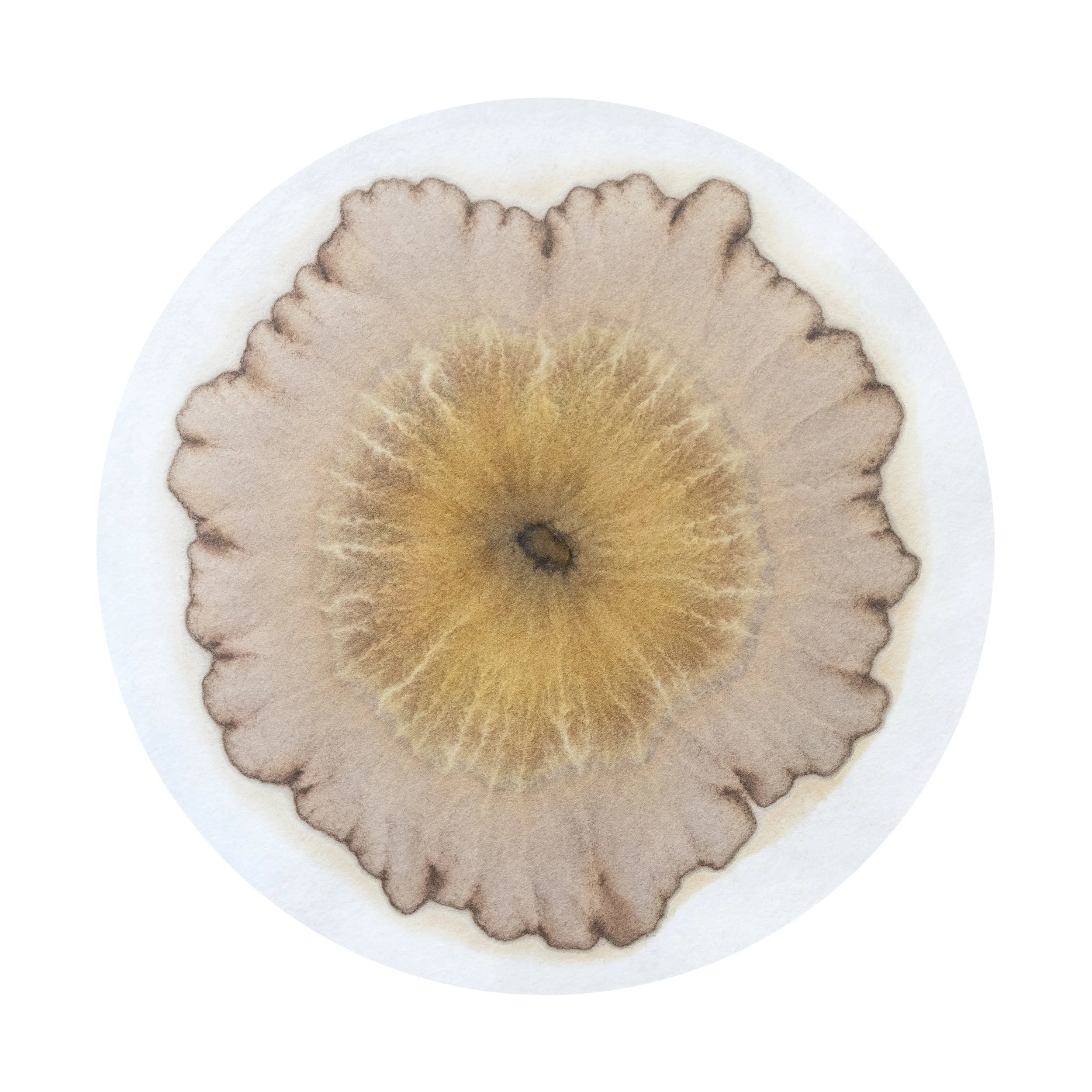
A chromatogram of ancient oak tree, 2025
Suffolk, UK
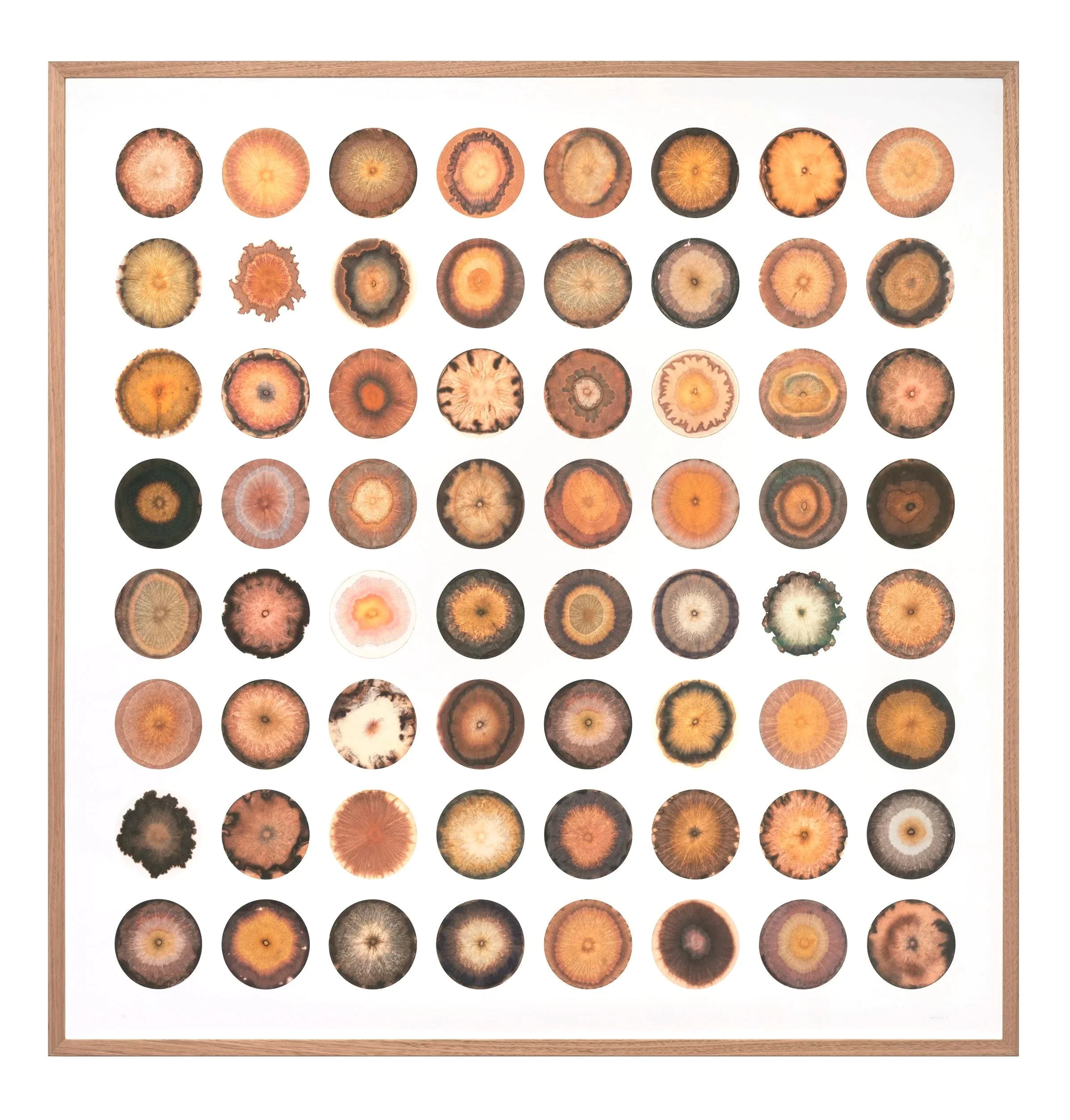
64 Trees, 2024 - more information about this work here.
“Sammy is less interested in showing the world as image and more interested in producing artefacts that are inseparably part of the world and which embody within them the forces of time and chemistry and light distinctive to particular places in the world. This is true of all her works, but perhaps most evident in her series of chromatograms, in which the ‘image’, if we can call it that, emerges as a direct, non-representational trace of the interactions of place-specific physicality as expressed in soils and waters.”
Acts of Co-Creation, 2021 | Exhibition Essay
Dr Kirsten Wehner, Director PhotoAccess
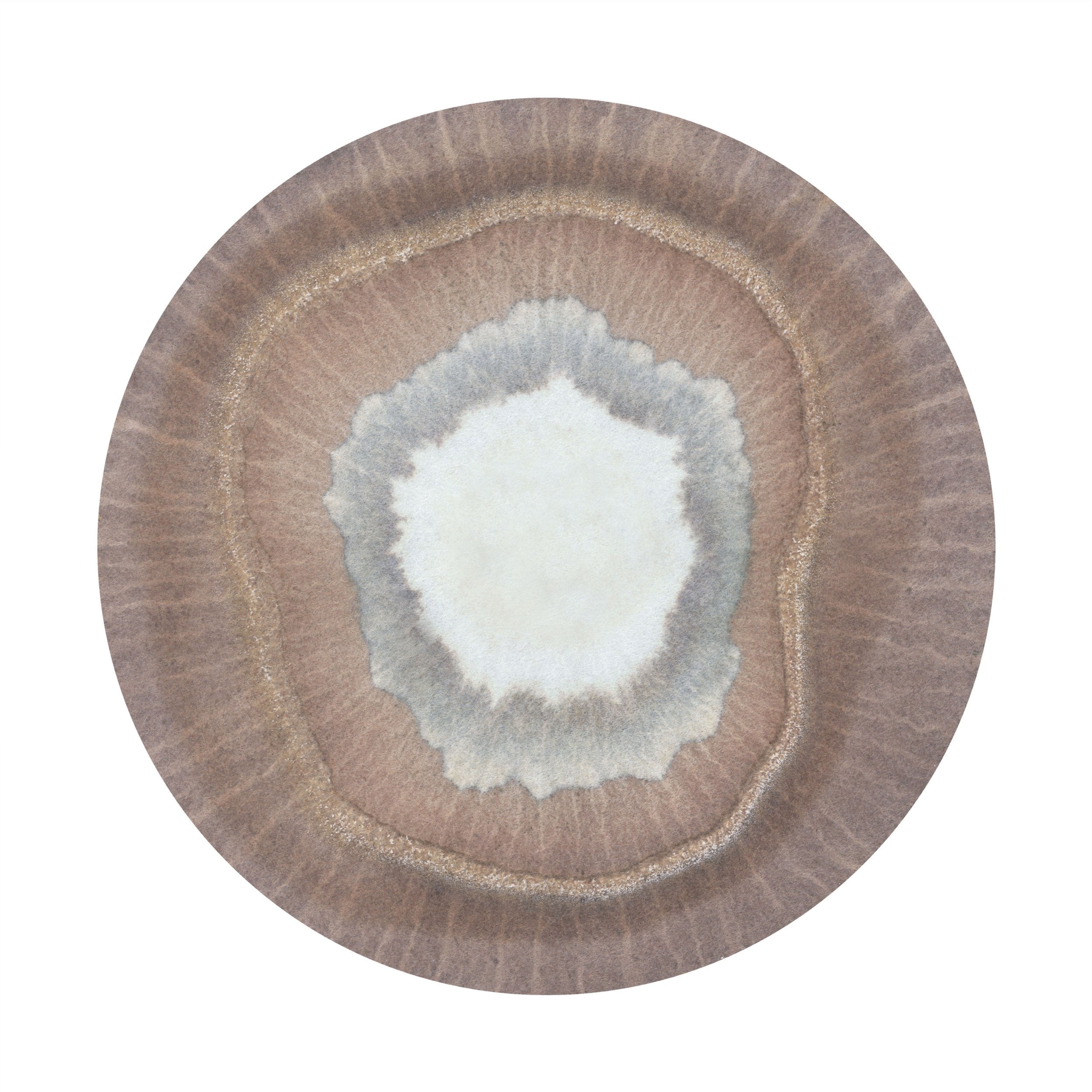
A chromatogram of dead butterfly, 2024
Ngunawal Country
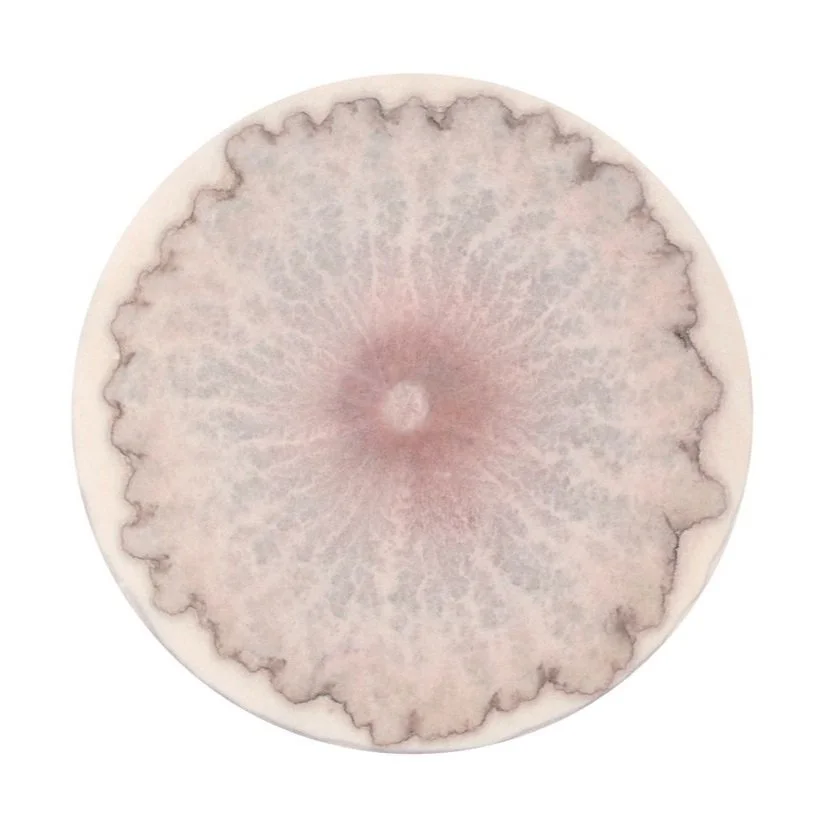
A chromatogram of caterpillars of dead white cedar moth, 2023
Wiradjuri Country
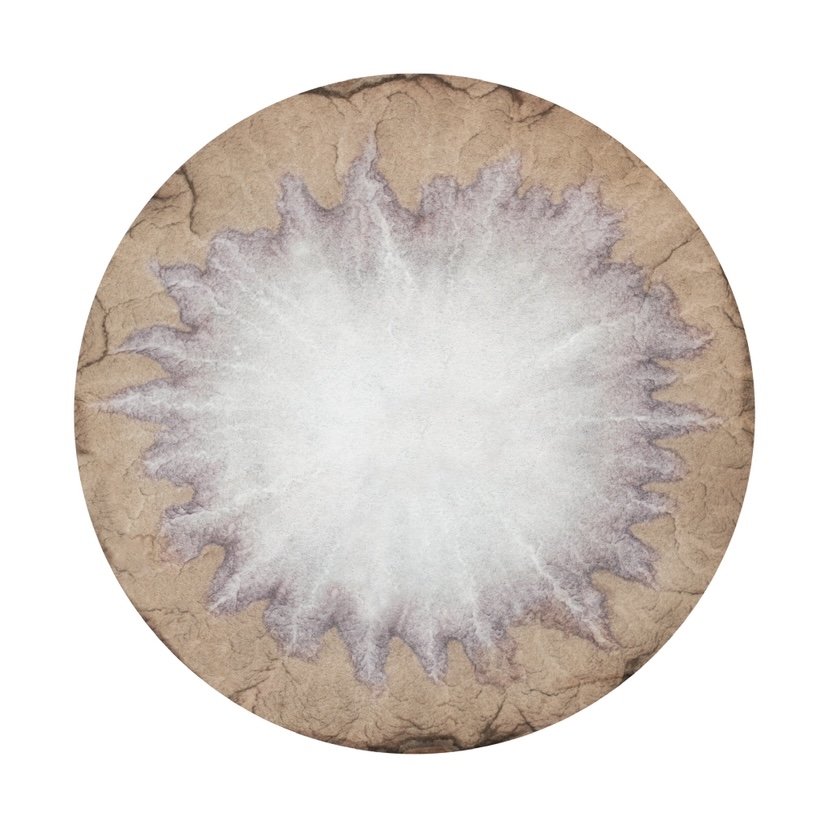
A chromatogram commission, 2022-3
Rae’s placenta

A chromatogram of red-bellied black snake found dead, hit by a car, 2023
Wiradjuri Country
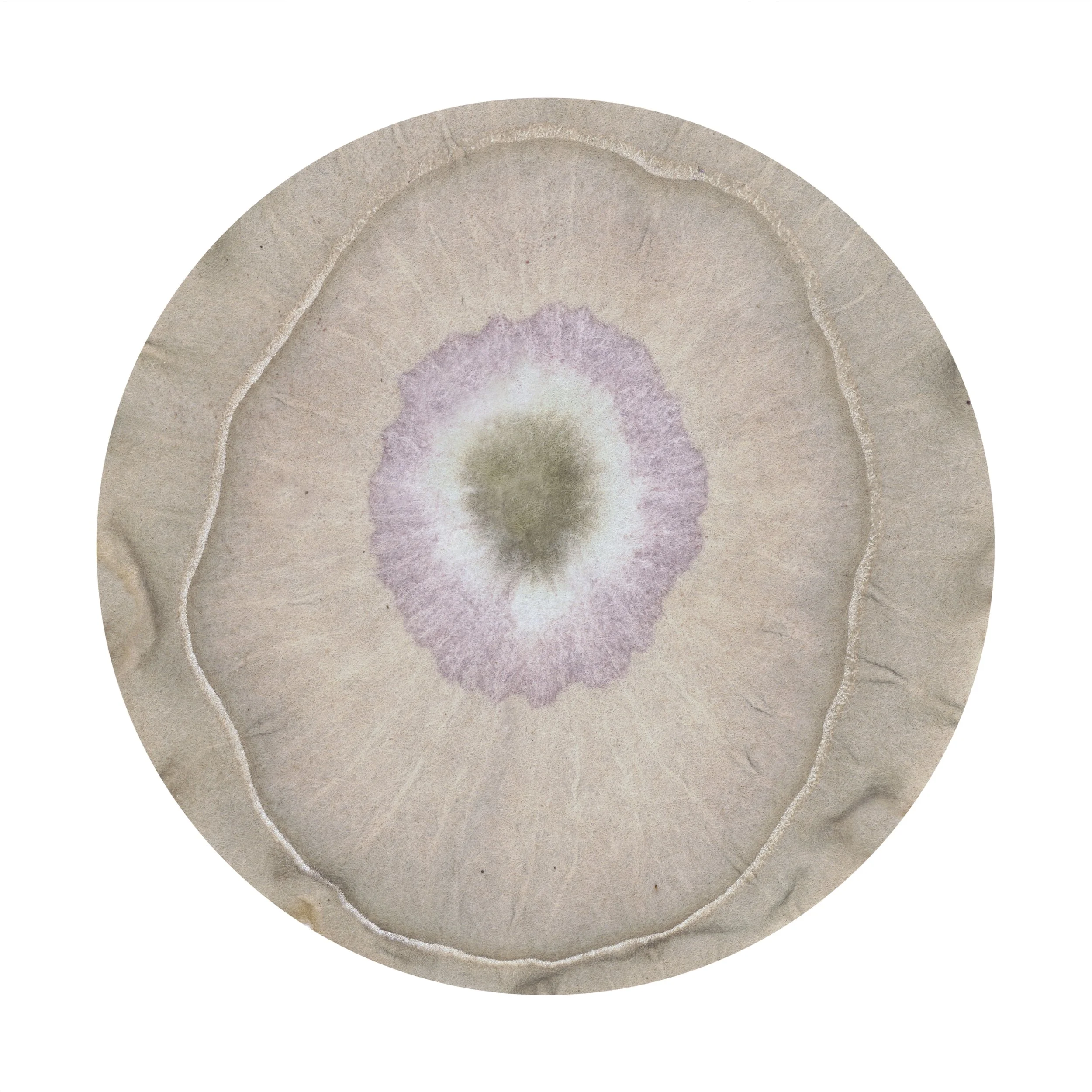
A chromatogram of shed snake-skin from Eastern Brown Snake, 2023
Wiradjuri Country

Material Resonance [beyond the veil], 2023 - National Photography Prize 2024 | Murray Art Museum Albury
Image credit: Jeremy Weihrauch

A chromatogram of an abandoned dusty spider web, 2023
Palawa Country
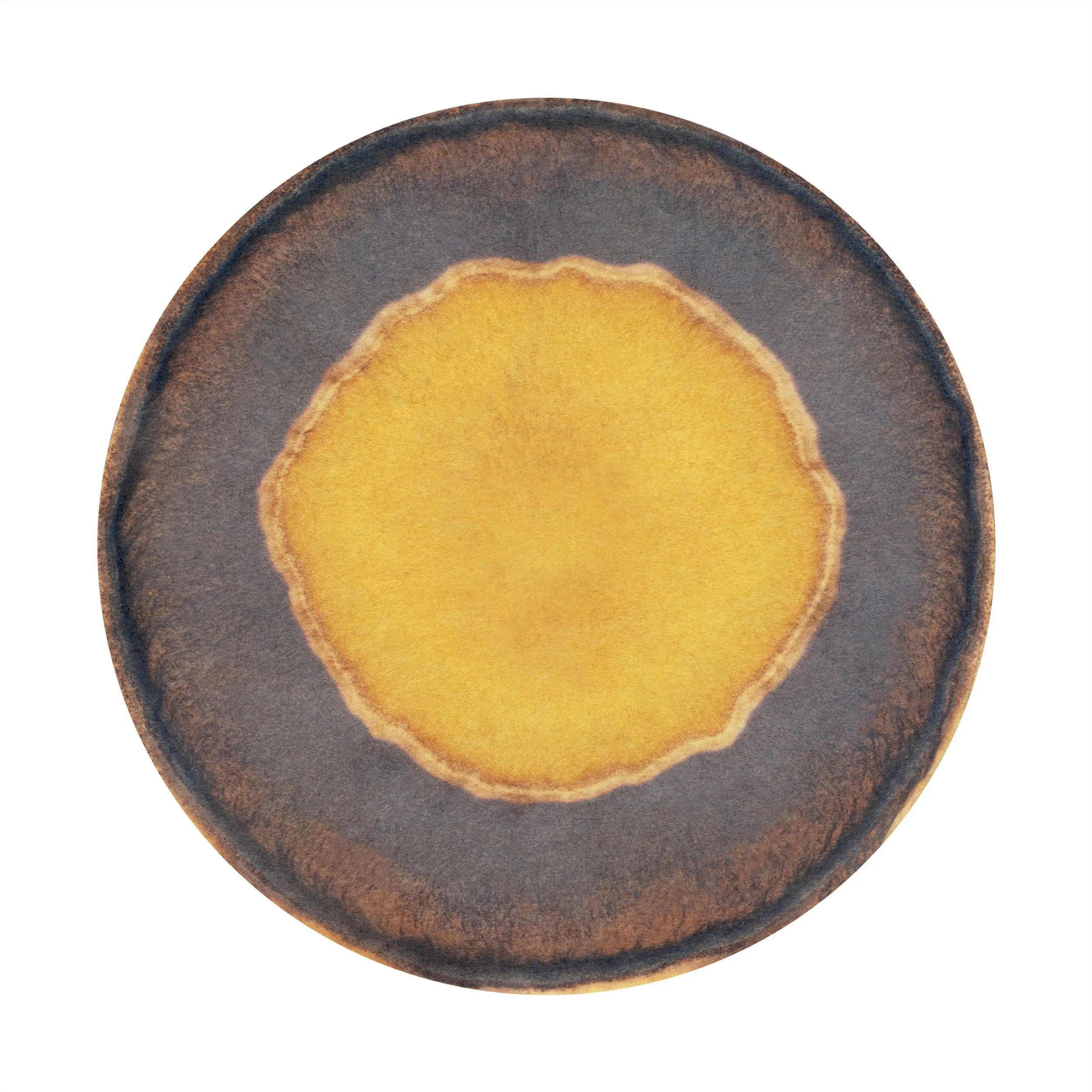
A chromatogram of dead bee, 2024
Ngunawal Country

A chromatogram of ‘Big Spotty’ for Adrian, 2023
Walbunja Country

A chromatogram of Uncle Owen’s glider tree, 2023
Walbunja Country

A chromatogram of eucalytpus for Jen, 2023
Djiringanj/Yuin Country
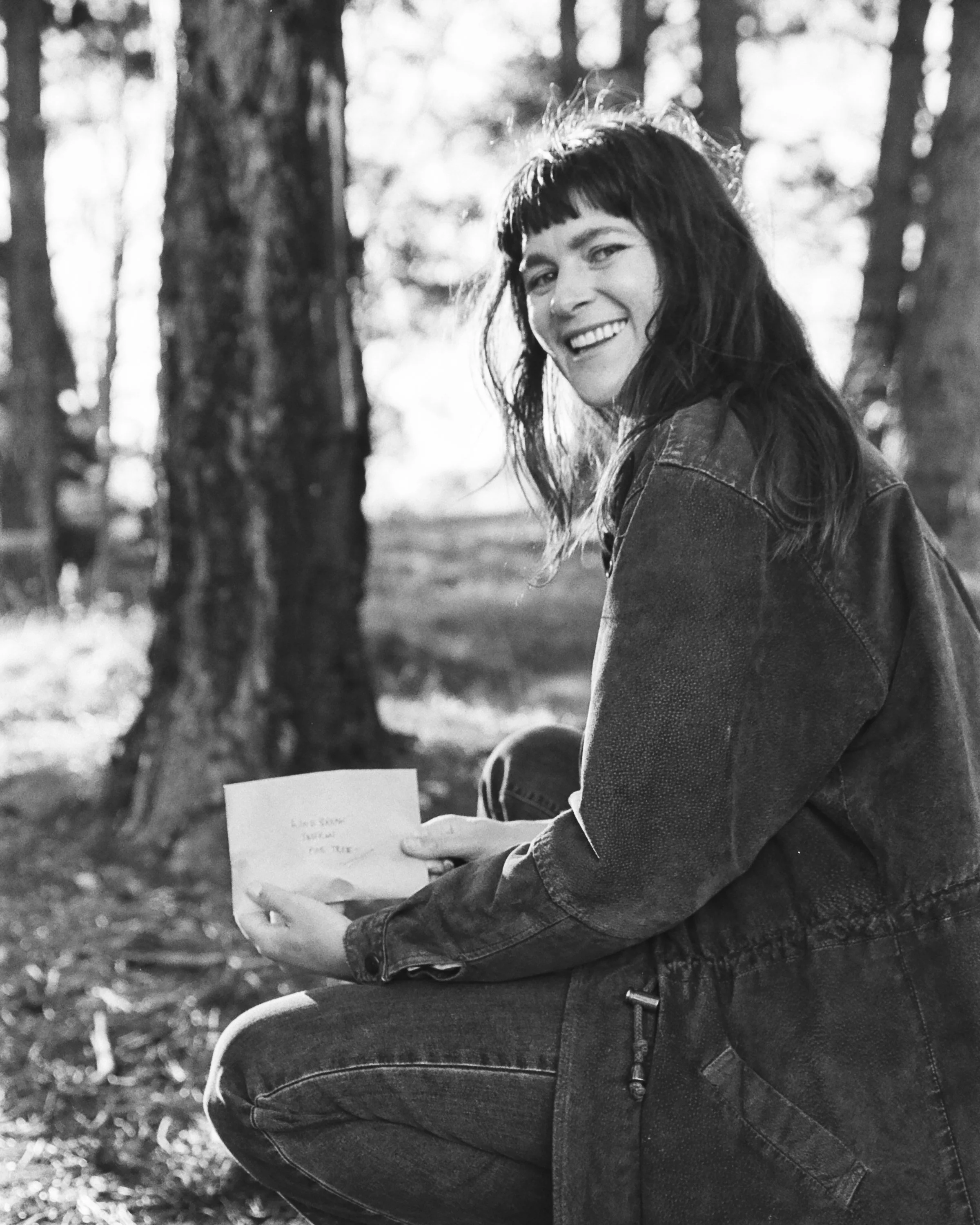
photo credit: Sami Harper
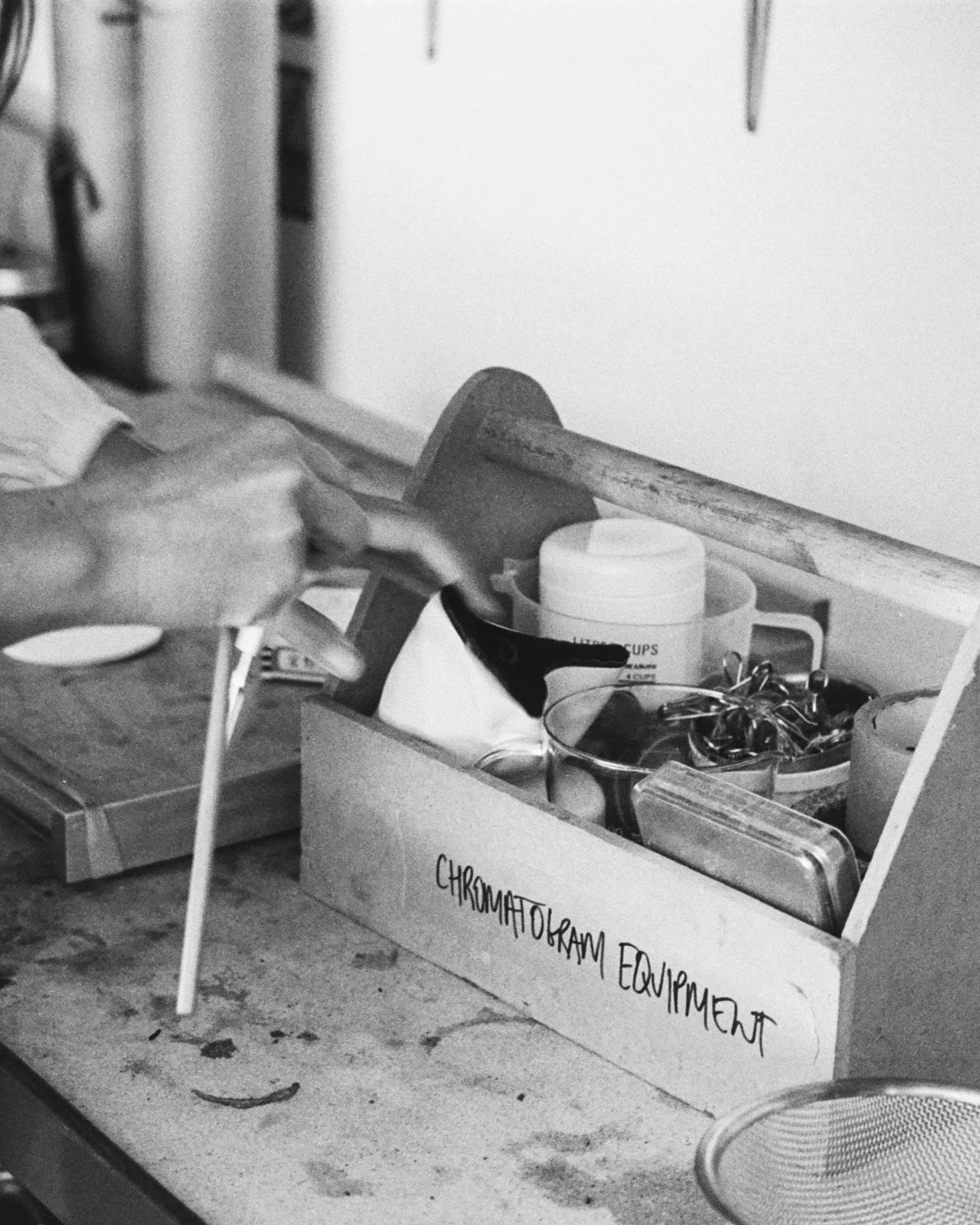
photo credit: Sami Harper
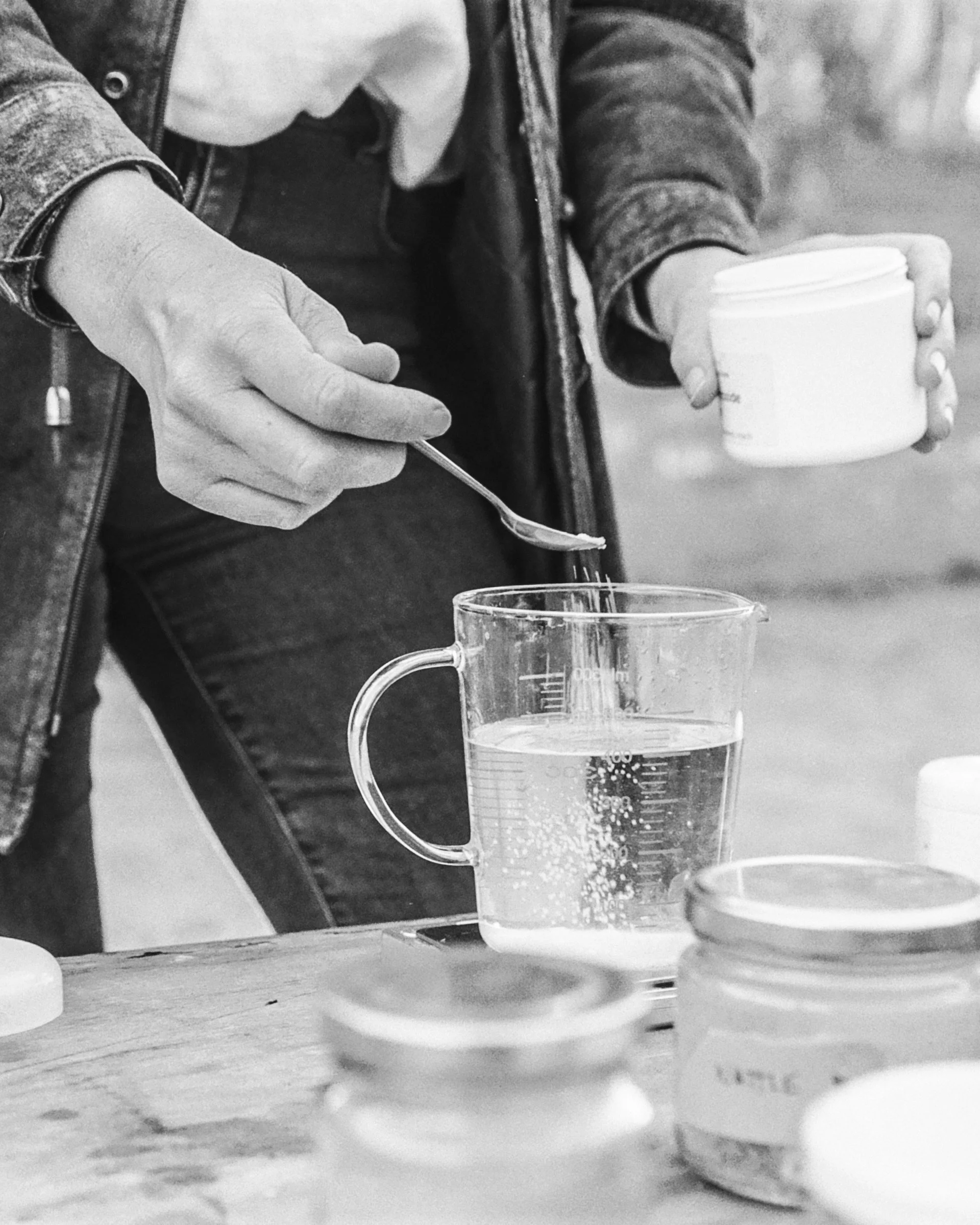
photo credit: Sami Harper
Copyright © All rights reserved.